
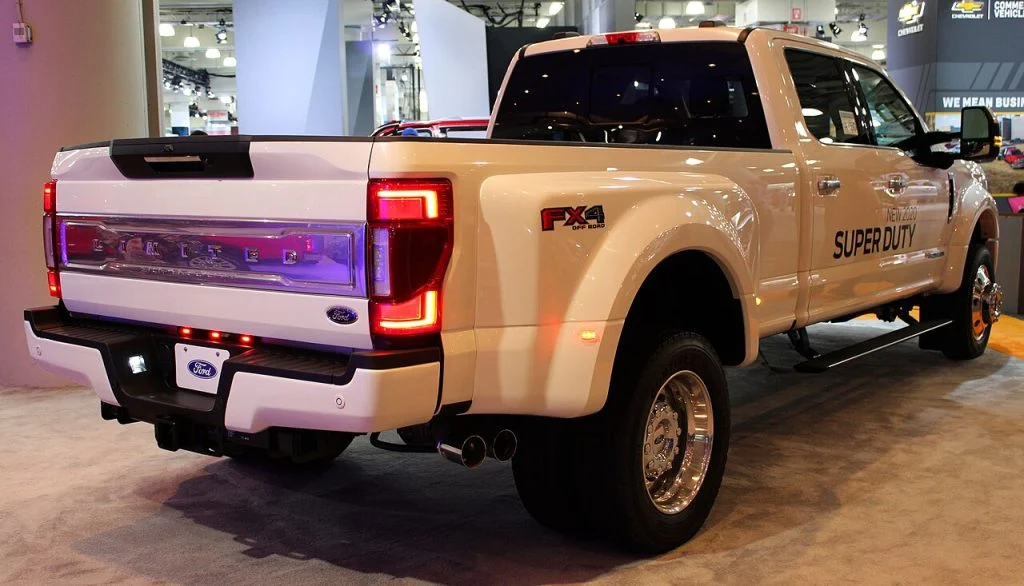
Quick answer: P0299 on a 6.4 Powerstroke is a turbo underboost code. The engine computer saw less boost than it wanted. Check for air leaks and restrictions first, compare commanded and actual boost, then test the VGT system. Condemn the turbo only if those tests pass or it has clear physical damage.
What does P0299 mean on a 6.4 Powerstroke?
P0299 is described as “Turbo/Super Charger Under Boost.” On a 6.4L, it means actual boost fell short of the boost the engine computer wanted. The code tells you what happened, but not which part caused it.
This guide applies to the Navistar-built 6.4L used in Ford Super Duty trucks from 2008 through 2010. Work in this order: look for leaks and restrictions, compare commanded and actual boost, test the VGT system, then judge the turbos.
You may see a specific psi and time limit quoted online as the code’s trigger. No such figure was confirmed in a Ford service document for this guide, so do not diagnose from it.
How does the 6.4L twin-turbo system make boost?
The 6.4L uses two turbos in sequence. Ford says a high-pressure variable turbo spools first for quick throttle response, and a larger low-pressure turbo adds airflow at peak power and torque.
| Turbo | Size | Type | Job | What a fault can do |
|---|---|---|---|---|
| High-pressure | 52mm | Variable geometry | Responds first for quick throttle response | Slow response, low boost, or boost that does not follow commands |
| Low-pressure | 65mm | Fixed geometry | Adds airflow at peak demand | Boost falls short when the engine asks for the most air |
The BorgWarner sizes above come from a history of the engine, which also puts stock boost at about 40 psi. Treat that as a general figure, not a test target at a given rpm or load.
A leak anywhere between the turbos, intercooler, and intake can look like a weak turbo. The turbos may be compressing air normally, but some of that air escapes before it reaches the engine. Replacing a turbo will not fix that.
Be careful with generic P0299 lists. Many are written for gasoline turbo engines and name parts such as diverter valves. Confirm that a part exists on your 6.4L in Ford service information before you test or buy it.
What symptoms come with P0299?
The main symptoms are loss of power and a check engine light. A 6.4 Powerstroke with low boost may feel flat or slow to respond.
Symptoms usually show up under load, while towing, or during hard acceleration. That is when the system is asked for the most boost, so a small leak or weak component has the least room to hide.
Before clearing anything, write down every companion code and save the freeze-frame data. Those records show the conditions when the fault set, and they can point you toward a related system.
What causes P0299 on a 6.4 Powerstroke?
| Cause | Why it lowers boost | Quick check | Repair difficulty |
|---|---|---|---|
| Intercooler boot or charge pipe leak | Pressurized air escapes | Look for oil film and splits, then pressure test | Easy to moderate |
| Air intake restriction | The turbos cannot draw enough air | Inspect the filter and intake path | Easy |
| Exhaust leak ahead of the turbos | Less exhaust energy reaches the turbine | Look for soot trails and listen for ticking | Moderate to major |
| Sticking VGT vanes or failing actuator | The high-pressure turbo cannot follow commands | Bidirectional VGT test while watching boost | Moderate to major |
| Faulty pressure sensor or wiring | The computer gets a false reading | Compare data with engine conditions, then test the circuit | Easy to moderate |
| Worn or damaged turbo | The turbo cannot move enough air | Check shaft play, oil, and wheel damage | Major |
| EGR fault | It can disturb airflow and boost readings | Check related codes and EGR function | Moderate to major |
EGR deserves a look on this engine. The 6.4L relied on heavy EGR, with roughly 25% of intake air being exhaust gas, and two EGR coolers. EGR coolers and valves also caused downtime on these engines, with problems increasing as mileage grows.
P0299 can also appear with a fault outside the air system. In an ALLDATA case on a 2004 F-450 with a 6.0L, P0299 was among the stored codes. The tech found low bank 1 fuel pressure and replaced the fuel conditioning module and bank 1 injectors, and the power loss, warning light, and codes did not return. That was a 6.0L, not a 6.4L, so it shows only that P0299 and a fuel-system fault can occur together.
What is the most common cause of P0299 on a 6.4 Powerstroke?
No verified failure-rate data ranks the causes on the 6.4L. A boost leak is the best place to start because the air path has many joints and the checks are cheap. Start there because of test order, not because a leak is proven to be the likely fault on your truck.
Can a boost leak cause P0299 on a 6.4L?
Yes. A split intercooler boot, loose clamp, or damaged charge pipe lets pressurized air escape, so boost can fall short of the commanded value.
Can sticking VGT vanes cause P0299?
Yes. The vanes help control how the high-pressure turbo responds. If they stick or the actuator cannot position them, actual boost may not follow the commanded value.
Can a bad sensor cause a P0299 code?
Yes. The computer judges boost from sensor data, so a bad sensor, connector, or wire can report a problem that is not really there. Test the sensor and circuit before buying turbo parts.
How do you diagnose and fix P0299 step by step?
Work from the cheapest test to the most costly, and fix any fault you find before moving on. Get all pass/fail values and torque specs from the Ford service manual for your truck.
- Scan all modules. Save every code and the freeze-frame data.
- Inspect the air filter and intake path. Look for a dirty filter, a collapsed duct, or debris.
- Inspect intercooler boots, clamps, and charge pipes. Oil film and splits are the main clues.
- Pressure or smoke test the intake side. This can find leaks that are too small to see.
- Check for exhaust leaks ahead of the turbos. Look for soot trails around pipes and joints.
- Compare commanded and actual boost. Use a bidirectional scan tool and test VGT response.
- Check sensors and wiring. Follow the tests in the Ford shop manual.
- Inspect the turbos. Check for shaft play, oil, and damage.
- Clear the code and road test under load. Confirm the repair before calling the job done.
What tools do you need?
- A scan tool that reads Ford diesel data and all modules
- Bidirectional scan capability for VGT testing
- A boost leak tester or smoke machine
- A digital multimeter and the Ford wiring diagrams
- Basic hand tools, a flashlight, and a torque wrench
- The Ford service manual for your model year
How do you test for a boost leak on a 6.4 Powerstroke?
- Let the engine cool and keep it off.
- Seal the open ends of the section you are testing with couplers or plugs made for the job.
- Add regulated air at the pressure allowed by the service manual and your tester, or introduce smoke.
- Listen at each joint, then spray soapy water and watch for bubbles. With smoke, watch for wisps.
- Repair any leak and test again.
Pressurized plugs and couplers can blow off, so secure them and stay out of their path. Some air can also pass through open intake valves. Focus on air escaping from joints and pipes, and follow the manual’s method for judging leak-down.
How do you confirm the repair worked?
Clear the codes only after saving them. Then road test under conditions similar to the freeze-frame data, with a helper watching the scan tool if possible.
Actual boost should follow commanded boost within the limits in the Ford manual. Power should feel normal, and P0299 should not return as an active or pending code.
Is it the turbo, the actuator, or a boost leak?
Use these rules after you have run the tests above:
- If boost falls short and a pressure test finds a leak, fix the leak first and retest.
- If the system seals but boost does not follow commands, focus on VGT vane and actuator function.
- If the sensor reading does not make sense for engine conditions, test the sensor and circuit before buying parts.
- If leak, restriction, sensor, and VGT tests are complete and boost is still low, the turbo becomes a likely fault.
- If the turbo has clear physical damage, such as a damaged compressor wheel, replacement is justified.
Do I need a new turbo if I have a P0299 code?
Not based on the code alone. P0299 reports low boost, and leaks, restrictions, sensors, and VGT faults can all cause it. Replace a turbo only after those tests are complete or when there is clear physical damage.
Can you keep driving with P0299?
Driving a 6.4 Powerstroke with P0299 may be possible for short, gentle trips to a repair location if the truck runs normally. Avoid towing and heavy loads until the fault is diagnosed.
Stop driving if you notice any of these:
- Heavy smoke
- Rapid oil or coolant loss
- Loud turbo noise
- A sudden, severe power drop
The 6.4L also uses a diesel particulate filter cleaned through regeneration, and Ford recommended DPF cleaning every 100,000 to 120,000 miles. A fault that disturbs the air and fuel balance can increase soot, so do not ignore an unresolved P0299.
Do not try to solve the problem by raising boost. Stock 6.4L pistons can crack, likely because of high boost and drive pressure. Find the fault instead of adding stress to the engine.
When should you call a diesel shop?
Call a diesel shop in any of these situations:
- You do not have access to bidirectional testing.
- You cannot find the leak.
- The diagnosis calls for turbo removal.
Turbo and up-pipe work on this engine is a major job. Ask the shop to share its boost data and leak test results before it replaces a turbo.
Check for open recalls by VIN on the NHTSA recall lookup. Also ask a Ford dealer whether any service bulletins apply to your truck and symptoms.
Frequently Asked Questions About P0299 on a 6.4 Powerstroke
Can an EGR fault cause P0299 on a 6.4 Powerstroke?
Yes, an EGR fault can contribute to P0299 on a 6.4 Powerstroke because it can disturb airflow and boost readings. This engine relied on heavy EGR and has two EGR coolers. Check for related codes and test EGR function, but finish the leak and restriction checks first.
Can an exhaust leak cause P0299 on a 6.4L?
Yes, an exhaust leak ahead of the turbos can cause P0299 on a 6.4L. Escaping exhaust means less energy reaches the turbine, so the turbos may not make the boost the computer wants. Look for soot trails around pipes and joints, and listen for ticking.
Can a clogged air filter cause P0299 on a 6.4 Powerstroke?
Yes, a clogged air filter or other intake restriction can cause P0299 because the turbos cannot draw enough air. Inspect the filter and the whole intake path for dirt, a collapsed duct, or debris. This check is easy, so do it before testing the VGT system or turbos.
Should you clear P0299 before diagnosing it?
No, do not clear P0299 until you have saved every code and the freeze-frame data. Those records show the conditions when the fault set and can point to a related system. After the repair, clear the code and road test under similar conditions to confirm the fix.
How much boost does a stock 6.4 Powerstroke make?
A stock 6.4 Powerstroke makes about 40 psi of boost, according to a history of the engine. Treat that as a general figure, not a test target at a given rpm or load. Use the pass and fail values in the Ford service manual when you judge boost.
Will raising boost fix P0299 on a 6.4 Powerstroke?
No, raising boost does not fix the fault behind P0299 and can add stress to the engine. Stock 6.4L pistons can crack, likely because of high boost and drive pressure. Find the leak, restriction, sensor, or VGT problem instead, then confirm that actual boost follows commanded boost.
