
Quick answer: P242F on a 6.4 Powerstroke means “Diesel Particulate Filter Restriction – Ash Accumulation.” The PCM sees exhaust pressure across the DPF stay high even after a regen, so it blames ash. A regen cannot burn ash off. Rule out a bad pressure sensor or hoses first, then clean or replace the DPF.
What does P242F mean on a 6.4 Powerstroke?
P242F is defined as “Diesel Particulate Filter Restriction – Ash Accumulation”. The PCM compares exhaust pressure before and after the diesel particulate filter (DPF). After a regeneration (regen) finishes, that pressure difference should drop. If it does not, the PCM assumes the DPF is restricted and sets the code.
The key point is that ash cannot be burned off. A regen only removes soot. To clear real ash, the DPF has to come off the truck to be cleaned or replaced.
This guide covers 2008-2010 Ford F-250 through F-550 trucks with the 6.4L. The 6.4L was the first engine in Ford’s history to use a DPF, so many of these trucks are now old enough for ash to be a real issue.
How is ash different from soot in the DPF?
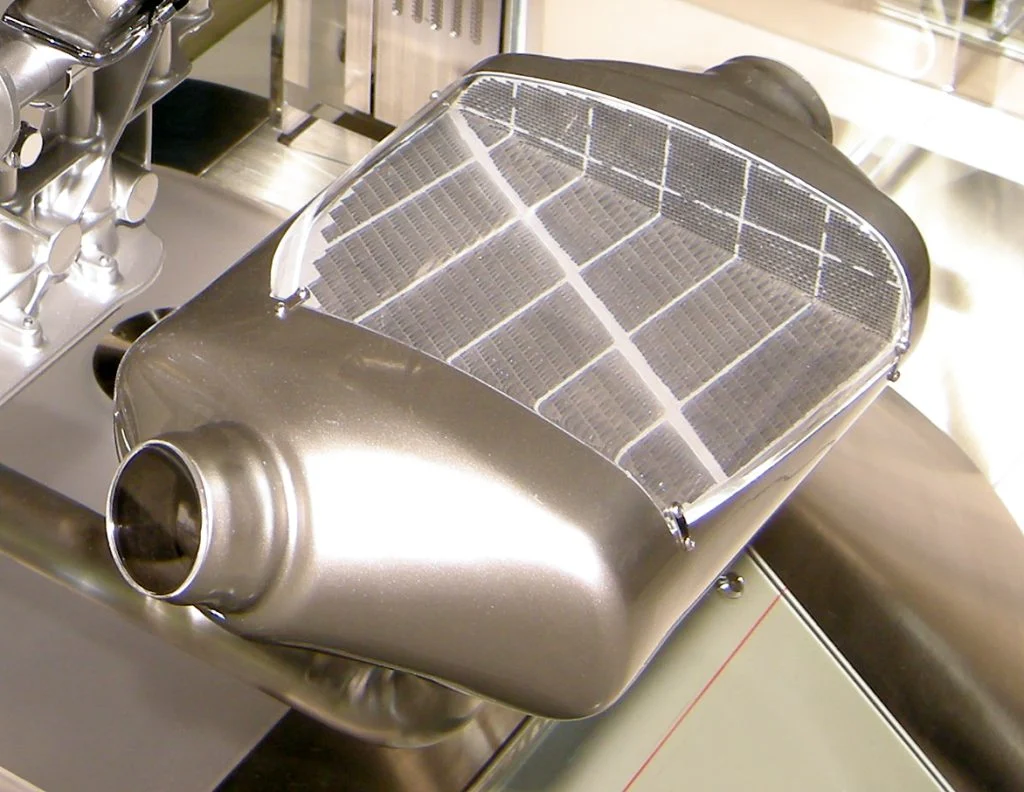
Soot is unburned carbon from combustion. It burns off during a regen. Ash is the non-burnable residue left behind. It comes mostly from oil additives and from engine oil that gets burned in the cylinders or leaks into the exhaust. Ash stays in the filter until the DPF is cleaned off the truck.
| Soot restriction (P2463) | Ash restriction (P242F) | |
|---|---|---|
| What builds up | Carbon from combustion | Oil additive and oil-burning residue |
| Does a regen remove it? | Yes | No |
| What the truck does | Tries to regen to burn soot off | Pressure stays high after regen |
| Usual fix | Complete a regen, fix the cause of excess soot | Remove DPF to clean or replace, then reset values |
If your truck shows a soot code instead, see our guide to code P2463 [LINK: P2463 article]. This article sticks to ash.
What symptoms come with P242F?
Symptoms vary. Some trucks show nothing but the stored code. Others show some mix of these:
- Check engine light on
- A “clean exhaust filter” or similar message on the dash
- Regens that happen more often, or that don’t seem to finish
- Loss of power, especially under load or when towing
- Worse fuel economy
- High exhaust back pressure
What causes P242F on the 6.4L?
There are two groups of causes. Either ash has truly built up, or the PCM is getting a false pressure reading. Check both before you spend money on the filter.
Real ash buildup
- Normal aging. Every DPF collects ash over its life. An older, high-mileage filter may simply be full.
- Wrong oil. On the 6.4L, oils that don’t meet spec cause ash to build up in the DPF. Oil that isn’t low-ash CJ-4, or isn’t Ford-approved, speeds this up.
- High oil use. Worn turbo seals, rings or valve guides, a failed EGR cooler, or other leaks can send oil into the exhaust. That oil turns into ash.
False readings from the sensor or hoses
Yes, a bad DPF pressure sensor can cause P242F. The PCM only knows what the sensor tells it. Common false-reading causes include:
- A failed DPF pressure sensor
- Sensor hoses that are cracked, kinked, plugged with soot, or melted by exhaust heat
- Damaged wiring or connectors at the sensor
- An ash counter that was not reset after an earlier DPF cleaning or replacement
How do you diagnose P242F step by step?
Work from cheap checks to expensive ones. You will need a scan tool that can read live DPF data and command a regen on a 6.4L.
- Scan all modules. Write down every code, not just P242F. Sensor, EGR or regen codes change the diagnosis.
- Check freeze frame data. Note the conditions when the code set, such as load, speed and temperature.
- Review oil and service history. Confirm what oil has been used and whether the DPF was ever cleaned or replaced.
- Inspect the sensor hoses. Follow both hoses from the DPF to the sensor. Look for cracks, kinks, soot plugs and heat damage. Blow them out or replace them if in doubt.
- Check the sensor at key-on, engine-off. With no exhaust flow, the DPF pressure reading should be close to zero. A reading well above zero points to a bad sensor or wiring.
- Compare at idle. Start the engine and watch the reading. Note it so you can compare after a regen.
- Command a regen. Watch soot load and DPF pressure. If soot load drops but pressure stays high, the restriction is most likely ash.
- Check oil use before cleaning. Look for oil in the turbo outlet and exhaust, and track how much oil the engine uses. Cleaning a DPF without fixing oil burning just refills it with ash.
Can a regen clear a P242F code? It can clear soot and may lower pressure a little. But if ash is the real cause, the code will come back, because a regen cannot remove ash.
How do you fix P242F on a 6.4 Powerstroke: clean or replace the DPF?
First, fix any false-reading cause: hoses, sensor, wiring or a missed ash counter reset. Clear the code and test drive. Only move to the DPF if the code returns and the data still points to ash.
Ash has to be removed off the truck. Specialty shops usually bake the filter in a kiln to burn off any soot, then use pulses of air to blow the loose ash out. They often test the airflow before and after to confirm the filter is open again.
| Off-truck cleaning | New DPF | |
|---|---|---|
| Cost | Usually lower | Usually much higher |
| Downtime | Filter is sent out or dropped off; you wait for its return | Depends on parts availability |
| Best for | An intact filter that is only full of ash | A cracked, melted or damaged filter |
| Main risk | Hidden damage may limit how well it works | Higher upfront cost |
Cost depends on whether you remove and reinstall the DPF yourself, local shop rates, shipping, and whether you buy an OEM or aftermarket replacement. Get quotes for both options before you decide.
When cleaning makes sense
- The filter face looks intact, with no cracks or melted spots.
- The cause of the ash is known and fixed, such as wrong oil or a repaired oil leak.
- The shop can show flow test results after cleaning.
When to replace the DPF
- The substrate is cracked or melted, often from an overheated regen.
- The inlet or outlet face is damaged or crumbling.
- The filter fails a flow test after cleaning.
- Heavy oil soaking makes cleaning unlikely to restore it.
Decision rule: clean an intact filter, replace a damaged one. In both cases, fix oil burning first.
Resetting the PCM after service
After cleaning or replacing the DPF, reset or relearn the DPF and ash values. This is done with Ford’s dealer tool or an aftermarket scan tool that supports this service function on the 6.4L. If you skip it, the PCM may still think the filter is full and the code can return.
After the reset, clear codes, run a regen if the tool allows it, and confirm the DPF pressure reading is lower than before.
Can you keep driving with a P242F code?
Driving gently for a short time to get the truck diagnosed is usually OK. Don’t tow, don’t work the engine hard, and don’t ignore the code for weeks.
The risks of waiting include:
- High exhaust back pressure, which cuts power and fuel economy
- More frequent regens, which add heat and use more fuel
- Heat damage that can crack or melt the DPF, turning a cleaning job into a replacement
Deleting the DPF is not a legal fix. Removing or disabling emissions equipment on a truck driven on public roads breaks US federal anti-tampering rules.
How do you prevent P242F from coming back?
Oil is the biggest factor you control. Because of its EGR system and DPF, the 6.4L needs a low-ash diesel engine oil that meets API CJ-4/SM. Ford’s 2008 Super Duty owner guide supplement also tells owners to use the recommended CJ-4 oil. One 6.4L maintenance guide lists 5W-40 for temperatures above -20°F.
Don’t assume newer oil is better here. A 2018 bulletin states that Ford does not recommend CK-4 or FA-4 grade oil for any of its diesel engines.
- Use CJ-4 oil as Ford specifies for the 6.4L, and check the label at every oil change.
- Fix oil burning and leaks quickly. Turbo seals, EGR cooler failures and worn rings all feed ash into the DPF.
- Let regens finish. Lots of short trips can stop a regen partway. Add a longer highway drive when you can.
- Keep records. Log every DPF cleaning, replacement and ash counter reset so the next tech knows the filter’s history.
P242F on a 6.4 Powerstroke: Frequently Asked Questions
Can a regen clear a P242F code on a 6.4 Powerstroke?
Usually not for long. A regen burns off soot, but it cannot remove ash. It may lower DPF pressure a little and clear the code for a while. If ash is the real cause, P242F will come back, and the DPF must come off the truck to be cleaned or replaced.
Can a bad DPF pressure sensor cause P242F?
Yes. The PCM only knows what the DPF pressure sensor tells it, so a failed sensor can set P242F. Cracked, kinked, plugged or melted sensor hoses and damaged wiring can do the same. At key-on, engine-off, the reading should be close to zero. A reading well above zero points to the sensor or wiring.
How do you clean ash out of a 6.4 Powerstroke DPF?
Ash has to be removed with the DPF off the truck. Specialty shops usually bake the filter in a kiln to burn off soot, then use pulses of air to blow the loose ash out. Many shops test airflow before and after cleaning to confirm the filter is open again.
How do you reset the DPF ash counter on a 6.4 Powerstroke?
After cleaning or replacing the DPF, reset or relearn the DPF and ash values with Ford’s dealer tool or an aftermarket scan tool that supports this function on the 6.4L. Then clear codes, run a regen if the tool allows it, and confirm the DPF pressure reading is lower than before.
What oil prevents DPF ash buildup on a 6.4L Powerstroke?
Use a low-ash diesel engine oil that meets API CJ-4/SM, as Ford specifies for the 6.4L. One 6.4L maintenance guide lists 5W-40 for temperatures above -20°F. Ford does not recommend CK-4 or FA-4 oil for its diesel engines. Fixing oil burning and leaks also slows ash buildup.
