
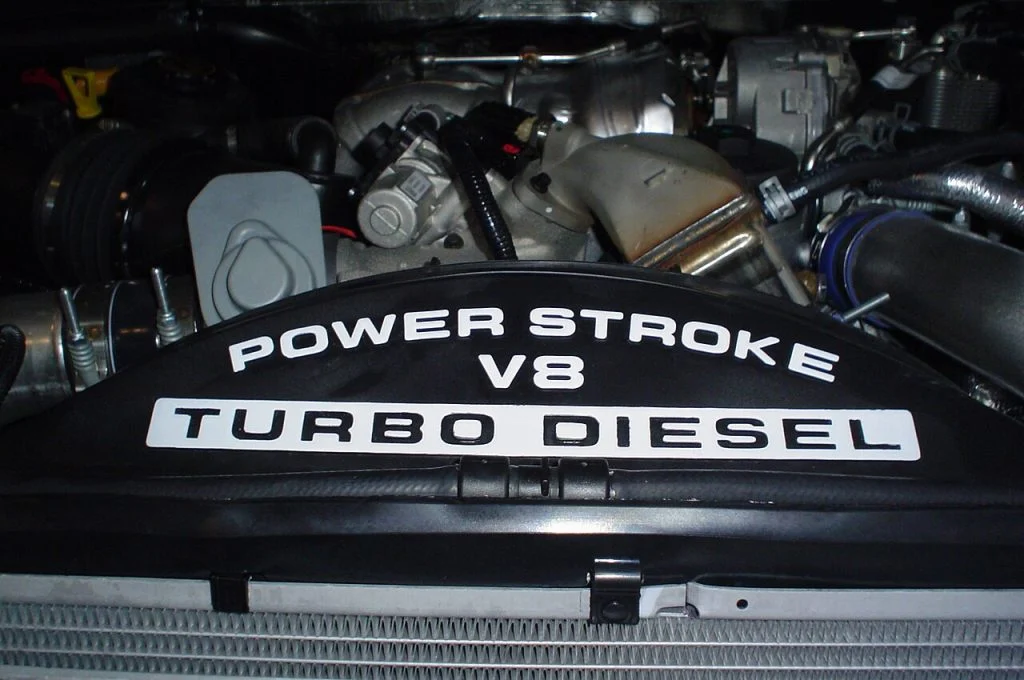
Quick answer: P2463 on a 6.4 Powerstroke means the computer sees more soot in the diesel particulate filter (DPF) than it considers safe. It does not prove the filter is ruined. Check the sensor data first, then complete a cleaning if it is safe. Clean or replace the DPF only if it stays restricted.
What does P2463 mean on a 6.4 Powerstroke?
P2463 stands for Diesel Particulate Filter Restriction – Soot Accumulation. Scan tool maker Foxwell describes it as the DPF holding more soot than the engine computer considers safe.
Treat the code as a warning to act on soon. Foxwell also notes that it does not automatically mean the DPF is ruined.
The likely path is simple: read the data, rule out sensor faults, regenerate if safe, and clean or replace the filter only if it stays restricted.
What symptoms come with P2463?
The main symptoms are exhaust filter messages, warning lights, and reduced engine power. Ford’s 2010 F-250/350/450/550 Owner’s Guide describes how these warnings escalate when the filter is not allowed to clean itself.
| What the driver sees | What it means | What to do next |
|---|---|---|
| DRIVE TO CLEAN EXHAUST FILTER | The DPF is full of soot, and recent driving has not allowed normal cleaning. | Drive to clean when it is safe, with PTO and SEIC off. |
| CLEANING EXHAUST FILTER | A cleaning is underway. | Stay above 30 mph until the message turns off. |
| Warning light and limited engine power | The message was ignored and cleaning was not permitted. | Stop normal use and scan the truck now. |
| Service engine soon light and further power loss | The truck still was not operated in a way that allowed cleaning. | Expect dealer service to restore full power. |
Why does my 6.4 Powerstroke say Drive to Clean Exhaust Filter?
Ford says this message appears when the DPF is full of exhaust soot and the truck is not being operated in a way that allows normal cleaning. In plain terms, the filter needs a cleaning and the truck has not had the right conditions to finish one.
Can you keep driving with P2463?
You can usually keep driving if you see only the message and the truck runs normally. Once power is limited, stop treating it as a normal drive. Use this rule based on Ford’s warning stages:
- Message only: Drive to clean the filter as soon as you safely can.
- Warning light with limited power: Act now. Do not keep working or towing with the truck. Scan it before deciding on a regeneration.
- Service engine soon light with further power loss: Expect dealer service. Ford says it is required at this stage to restore full power.
Two warnings apply at every stage. Foxwell advises against driving in power-reduction or limp mode because excessive exhaust temperature can damage the turbo. It also warns that multiple failed regenerations can overheat the DPF or clog it permanently. If a cleaning fails, find out why before you try again.
How long do you have to drive to clean the exhaust filter on a 6.4 Powerstroke?
Drive until the CLEANING EXHAUST FILTER message turns off. Ford’s guidance gives a condition rather than a set number of minutes: stay above 30 mph (48 km/h) until the message goes away. Choose a route where you can hold that speed without stopping often.
What causes P2463 on a 6.4 Powerstroke?
P2463 comes from either real soot buildup or a reading that makes the filter look worse than it is. The fix depends on which one you have, so separate them before buying parts.
True soot overload
Soot can build up when the truck’s use does not allow cleaning. Long idling and PTO work are the clearest examples because Ford states that regeneration will not start at idle or in PTO mode.
Blocked or interrupted regeneration
Some problems stop a cleaning from starting or finishing. Exhaust gas temperature (EGT) sensor faults are one example. Shutting the engine off during regeneration also leaves soot unburned.
Will a bad DPF pressure sensor cause P2463?
A DPF pressure sensor problem can cause a false or misleading restriction reading, so check it before blaming the filter. Inspect the sensor, its hoses, its wiring, and its connectors. Exhaust leaks upstream of the DPF can also skew the picture.
How do you diagnose P2463 step by step?
Test the data and the sensors before you judge the filter. You need a scan tool with 6.4L DPF live data and service functions. A basic code reader may not show enough.
- Scan all modules. Save the freeze frame data before clearing anything.
- Read soot load and regeneration history. Look for cleanings that were interrupted or did not finish.
- Inspect the pressure sensor circuit. Check the hoses, wiring, and connectors for damage, looseness, or blockage.
- Check differential pressure. Record it at idle and under load, then compare it with the factory spec.
- Confirm the EGT sensors make sense. Each sensor should report a logical value for the operating condition.
- Look for exhaust leaks. Pay close attention to the exhaust upstream of the DPF.
Pay special attention to P2452 or P2453. Foxwell lists both as DPF pressure sensor circuit codes, so resolve them before you condemn the filter.
Use Ford’s factory specifications for soot load and pressure. Generic numbers from other diesels can send you toward the wrong repair.
How do you fix P2463 on a 6.4 Powerstroke?
Work through these fixes in order. Each step either solves the problem or gives you better evidence for the next one.
Fix 1: Repair sensor, hose or wiring faults first
Correct bad data before making any regeneration decision. If the computer is working from false pressure or temperature readings, you cannot trust what it reports about the filter. A regeneration may also fail, which adds risk without solving the problem.
Fix 2: Drive the truck to complete a cleaning
Ford’s instructions are to drive above 30 mph until the CLEANING EXHAUST FILTER message turns off. PTO and Stationary Elevated Idle Control (SEIC) must be disengaged or inactive for the filter to clean properly.
Plan the drive so you do not have to stop and shut off partway through. This fix fits the message-only stage, when the truck still runs normally.
Fix 3: Run a forced regeneration with a scan tool
To force a regen on a 6.4 Powerstroke, use a scan tool that supports the function on this engine. Foxwell recommends this approach when soot is manageable and the sensors work. If either condition is not met, do not start the cycle.
- Follow the tool’s on-screen conditions exactly.
- Park outdoors, away from anything flammable.
- Stay with the truck and do not shut it off mid-cycle.
- If the cycle fails, stop and diagnose the reason before trying again.
Fix 4: Clean or replace the DPF
You do not automatically need to replace the DPF to fix P2463. Cleaning or replacement is for a filter that stays restricted after faults are fixed and regeneration fails. Foxwell points to professional cleaning or replacement when a forced regeneration is not suitable.
After the repair, clear adaptations and reset the DPF values with a capable scan tool. This keeps the computer from working from data that described the old condition.
Will clearing P2463 fix the problem?
No. Clearing the code erases the stored fault, but it does not remove soot or repair a bad sensor. If the cause remains, expect the warnings to return. Save the freeze frame data first, and clear the code only as part of a completed repair.
Is a DPF delete a legal fix for P2463?
No. EPA says tampering with a vehicle’s emissions control system is illegal under the Clean Air Act. It lists the DPF as an emission control and says tampering includes removing hardware, filters, and catalysts from the stock system.
EPA says those who sell or install defeat devices can be fined over $5,000 per device, and dealers can be fined over $5,000 per tampered vehicle. Under its FY2020-2023 defeat device initiative, EPA finalized 172 civil enforcement cases with penalties totaling $55.5 million.
The decision rule is simple: repair the system instead of removing it.
How do you keep P2463 from coming back?
Give the truck regular chances to finish a cleaning, and fix related faults early. These habits address the 6.4 Powerstroke regeneration problems you can control:
- Use ULSD only. EPA says all highway diesel vehicles must use ultra-low sulfur diesel, which has a 15 ppm sulfur limit.
- Limit long idling and PTO time. When you cannot avoid them, follow them with highway driving because regeneration will not start in those conditions.
- Respond to the first message. Do not ignore DRIVE TO CLEAN EXHAUST FILTER, and let the cleaning finish.
- Fix related codes quickly. Engine and exhaust faults can interrupt cleaning.
- Use the correct oil. Follow the oil specification in your owner’s guide.
- Check for bulletins. Ask a Ford dealer to look up open bulletins for your VIN.
Frequently Asked Questions About P2463 on a 6.4 Powerstroke
How do I force a regen on a 6.4 Powerstroke?
Use a scan tool that supports forced regeneration on the 6.4L engine, and only when soot is manageable and the sensors work. Follow the tool’s on-screen conditions exactly. Park outdoors, away from anything flammable. Stay with the truck, and do not shut it off during the cycle.
Do I need to replace the DPF to fix P2463?
No, P2463 does not automatically mean you need a new DPF. Fix any sensor, hose, or wiring faults first, then complete a cleaning or forced regeneration if it is safe. Clean or replace the filter only if it stays restricted after those repairs and regeneration fails.
What should I do if a 6.4 Powerstroke regeneration fails?
Stop and find out why the regeneration failed before you try again. Repeated failed regenerations can overheat the DPF or clog it permanently. Scan for sensor faults, check EGT readings, review regeneration history, and look for exhaust leaks upstream of the DPF. Then repair what you find.
Will a 6.4 Powerstroke regenerate at idle or in PTO mode?
No, Ford states that regeneration will not start at idle or in PTO mode. Long idling and PTO work can therefore let soot build up in the DPF. When you cannot avoid them, follow them with highway driving so the truck has a chance to finish a cleaning.
Can a basic code reader diagnose P2463?
A basic code reader may not show enough to diagnose P2463 properly. You need a scan tool with 6.4L DPF live data and service functions. It should let you read soot load, regeneration history, and differential pressure, which you then compare with Ford’s factory specifications.
What other codes should I check along with P2463?
Check for P2452 and P2453 alongside P2463. Foxwell lists both as DPF pressure sensor circuit codes, and they can point to a sensor problem rather than a bad filter. Scan all modules, save the freeze frame data, and resolve any pressure sensor codes before you condemn the DPF.
