
Quick answer: P0087 on a 6.7 Powerstroke means the PCM sees fuel rail pressure that stays lower than the pressure it commanded. Common causes are clogged fuel filters, water or gelled fuel, a weak lift pump, a failing CP4.2 high-pressure pump, a bad rail pressure sensor or control valve, and wiring faults. Check live data before replacing parts.
The Powertrain Control Module (PCM) sets diagnostic trouble codes for many reasons. Some codes are minor. Others are serious.
P0087 is one of the serious ones. It means “fuel rail/system pressure too low.” On the 6.7 Powerstroke, the fix depends on the cause. That can be as simple as new fuel filters or as big as a high-pressure pump replacement.
This guide covers what the code means, how the 6.7L fuel system works, what causes low rail pressure, how to diagnose it in the right order, and when to stop driving the truck.
What Does p0087 Code Mean On 6.7 powerstroke?
P0087 is a generic OBD-II trouble code. It means “Fuel Rail/System Pressure – Too Low”. On the 6.7 Powerstroke, it is set when the PCM detects low pressure in the high-pressure fuel rail.
The fuel rail pressure (FRP) sensor only reports pressure. It does not decide anything. The PCM compares the rail pressure it wants (desired or commanded pressure) with the pressure the sensor reports (actual pressure). When actual pressure stays too low, the PCM sets P0087.
Here is a breakdown of the code p0087 on what each digit means:
- P = powertrain, which includes the engine, transmission, and other system components.
- 0 = a generic code also known as SAE.
- 0 = Fuel and air metering controls
- 87 = Defines the exact problem ( in this case, low fuel rail/system pressure)
How Does the 6.7 Powerstroke Fuel System Work?
The 6.7L has a low-pressure side and a high-pressure side. Knowing which part does what helps you find the cause of P0087 faster.
| Part | Where it is | What it does |
|---|---|---|
| Lift pump (electric, low pressure) | In the frame-mounted diesel fuel conditioning module (DFCM), in front of or beside the tank | Pulls fuel from the tank and feeds the high-pressure pump |
| DFCM fuel filter / water separator | Same frame-mounted module | First filter stage; separates water from fuel |
| Engine-mounted fuel filter | Driver side of the engine, behind the hot-side intercooler tube | Second filter stage before the injection pump |
| Bosch CP4.2 high-pressure pump | On the engine | Raises fuel to injection pressure and feeds the rails |
| Volume control valve (VCV/MPROP) | On the CP4.2 pump | Meters how much fuel enters the pump |
| Pressure control valve (PCV/DRV) | On the fuel rail | Regulates rail pressure |
| Fuel rail pressure (FRP) sensor | On the high-pressure fuel rail | Reports actual rail pressure to the PCM |
The 6.7L does not use a conventional fuel pressure regulator. The PCM controls rail pressure with the two valves listed above (Ford 6.7L diagnostic information). A fault in either valve can cause low rail pressure.
Exact part locations and connectors can vary by model year. Check the service information for your truck’s year before you start work.
How Serious Is Code p0087 On 6.7 powerstroke?
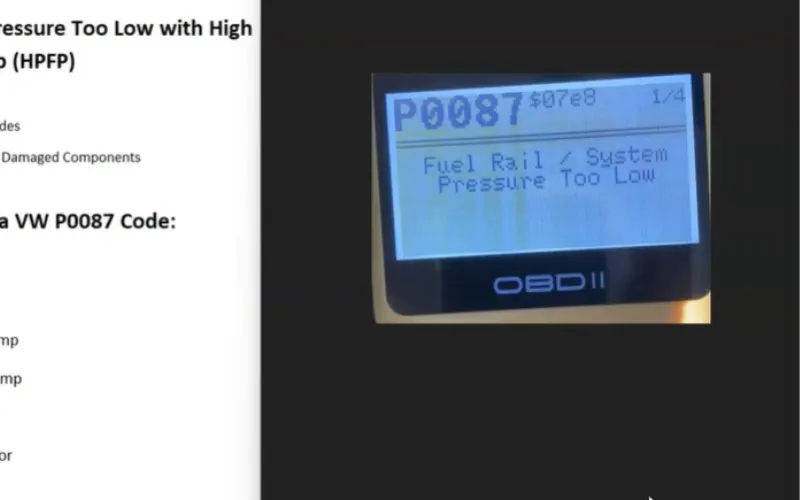
P0087 is serious. Low rail pressure can cause hard starts, misfires, low power, and stalling. These are real drivability problems.
The bigger worry on the 6.7L is the CP4.2 pump. Water in the fuel wears this pump quickly. Running it dry or letting air into the lines can also damage it (DieselHub). If the pump fails, metal debris can travel through the fuel system. That turns a pump job into a much bigger repair. So, diagnose P0087 as soon as you can.
What Causes Code P0087 On The 6.7 Powerstroke?
Low rail pressure is the condition. These are the parts and problems that can cause it:
- A faulty fuel pump (the low-pressure lift pump or the CP4.2 high-pressure pump)
- A defective fuel rail pressure sensor
- Damaged fuel line
- A clogged fuel filter (either of the two)
- Damaged PCM
- A faulty volume control valve on the pump or pressure control valve on the rail
- Damaged wiring or loose connectors at the sensor or control valves
- Water in the fuel or poor-quality fuel
- Gelled fuel in cold weather, which can restrict flow through the filters
- Running the tank very low, which can let the lift pump pull air
Can a clogged fuel filter cause P0087 on a 6.7 Powerstroke?
Yes. A restricted filter limits how much fuel reaches the CP4.2 pump. The pump then cannot build the rail pressure the PCM asks for. Overdue filters are one of the first things to check because they are the cheapest fix.
Is P0087 a sign of CP4 pump failure?
It can be, but not always. P0087 only says pressure is low. It does not name the failed part. Filters, fuel supply, and wiring problems can set the same code. One warning sign to look for: shiny metal debris in the DFCM filter base. That can mean the CP4.2 is failing.
Other Symptoms Of Getting p0087 Code On 6.7 powerstroke
Poor engine performance is the most common symptom of the code p0087 on the 6.7 Powerstroke. Other possible symptoms may include:
- Check engine light turning on.
- The engine starts stalling
- The power in the engine is too low.
- The engine may misfire.
- Starting and running are difficult.
- Powerstroke 6.7 may fail to start.
Which Codes Often Show Up With P0087?
Other stored codes help narrow down the cause. Read every code, not just P0087.
- P0088 – Fuel rail pressure too high. Seen together with P0087, it points toward a pressure control problem or a bad sensor reading rather than a simple supply shortage.
- P0093 – Fuel system large leak detected. Check for external leaks before anything else.
- P0191 – Fuel rail pressure sensor range/performance. Raises suspicion about the sensor itself.
- P0193 – Fuel rail pressure sensor circuit high. Points toward wiring, connector, or sensor faults.
How To Fix The p0087 Code On The 6.7 Powerstroke?
Fix P0087 by finding the cause first. Start with the cheap, simple checks. Move to expensive parts only when the data points there.
We recommend getting help from a qualified diesel technician if you are not fully comfortable with this work. But if you are, here’s the order to follow:
Safety warning: The 6.7L high-pressure side (CP4.2 pump, lines, rails, and injectors) runs at tens of thousands of psi. Never open or loosen any high-pressure fitting while the engine is running or the system is pressurized. A fuel spray at that pressure can pierce skin. Leave high-pressure work to a shop if you are unsure.
1. Read the Codes and Live Data First
Use a scan tool that shows live fuel data. Do this before you buy any parts.
- Record all stored and pending codes.
- Check the freeze-frame data. It shows the conditions when the code set, such as engine load, speed, and fuel temperature.
- Compare desired fuel rail pressure with actual rail pressure at idle and under load.
- If actual pressure lags only under load, suspect fuel supply (filters, lift pump, fuel quality). If the reading looks erratic or impossible, suspect the sensor or its wiring.
- Ask a Ford dealer to check your VIN for open recalls, technical service bulletins (TSBs), or PCM software updates related to fuel pressure.
2. Replace the Fuel Filter
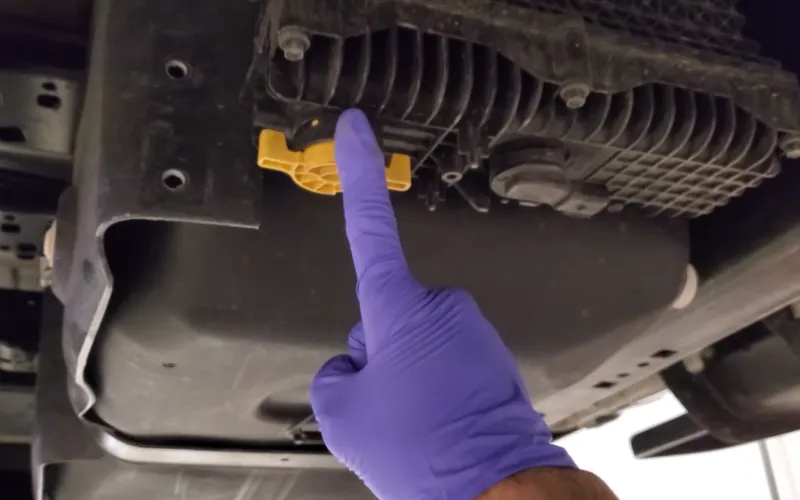
Start with the fuel filters, especially if they are due or you suspect bad fuel. The 6.7L has two filters. Replace both at the same time.
Step 1: Know Where Both Filters Are
One filter is in the frame-mounted diesel fuel conditioning module (DFCM). This module is also the water separator. It sits in front of or beside the fuel tank. The second filter is mounted on the engine, on the driver side, behind the hot-side intercooler tube.
Step 2: Perform Some Preparatory Work
Work with the engine off and cool. Do not open any high-pressure fitting. The filters are on the low-pressure side.
Place a drain pan under each filter to catch fuel that is left in the housing. Keep some rags handy. Drain water from the separator if your truck’s procedure calls for it.
Step 3: Remove and Inspect the Old Filters
Remove each filter following the steps for your model year. Before you install the new ones, look closely at the old filters and the DFCM filter base. Water or dark sludge suggests contaminated fuel. Shiny metal flakes can be a sign the CP4.2 pump is failing. If you see metal, stop and have the system inspected before driving.
Step 4: Install the New Fuel Filters
Install the new filters and any new seals that come with them. Keep dirt out of the housings. Do not prefill the engine-mounted filter with unfiltered fuel.
Step 5: Prime the Fuel System Before Starting
Turning the key on once is not enough. Prime the system like this (DieselHub):
- Turn the key to RUN. Do not crank.
- Wait until the electric fuel pump stops running, about 10–15 seconds.
- Turn the key OFF.
- Repeat this about 10–12 times.
- Start the engine. If it runs rough, do more key cycles next time.
Proper priming matters. Running the CP4.2 dry or leaving air in the lines can damage it.
How often should you change 6.7 Powerstroke fuel filters?
Change both filters every 22,500 miles, or when the message appears in the instrument cluster. Under severe service or with biodiesel blends, change them every 15,000 miles or 6 months (DieselHub).
3. Replace the Damaged Fuel Lines
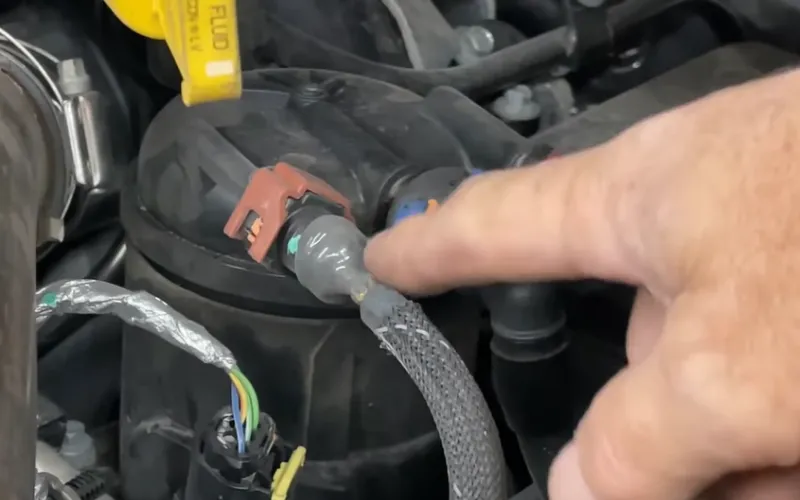
If the filters are fine, check the fuel lines. Look for wet spots, fuel smell, cracks, rubbed-through sections, and loose fittings. Pay attention to the supply line between the tank, the DFCM, and the engine. A leak or an air leak on this side can starve the CP4.2 pump.
Replace a damaged line with the correct part for your truck. Do not patch or splice any high-pressure line between the pump, rails, and injectors. Those lines must be replaced, and they are best left to a shop. If you see fuel spraying or a fresh leak near the engine, shut the engine off and do not drive.
4. Check the Wiring and Connectors
Before replacing any sensor or valve, inspect the wiring. With the key off, check the connectors at the fuel rail pressure sensor, the pressure control valve on the rail, and the volume control valve on the pump.
- Look for loose, corroded, or fuel-soaked connectors.
- Check for chafed or melted wires near hot parts.
- Use the wiring diagram for your model year to test power, ground, and signal circuits.
A wiring fault can make the PCM see low pressure that is not really there. Fixing a connector costs far less than a new pump.
5. Change the Faulty Fuel Pump
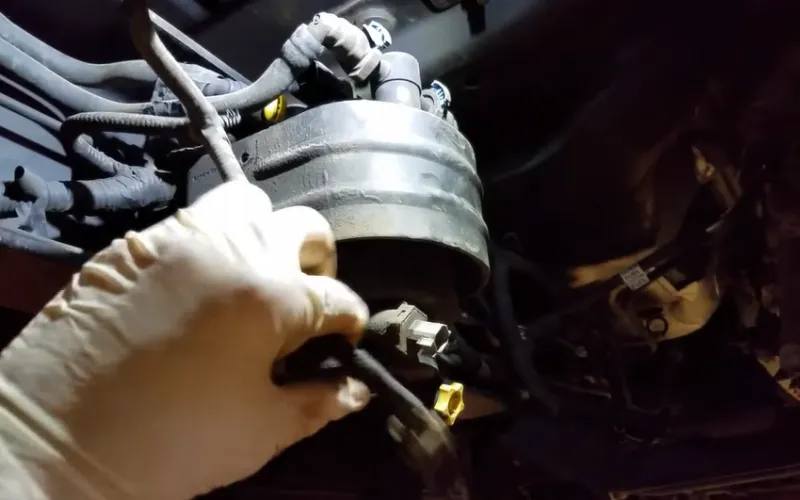
If P0087 comes back after the filters, lines, and wiring check out, a pump may be the problem. The 6.7L has two pumps. They are not the same job.
Step 1: Locate the fuel pump
The electric low-pressure lift pump is part of the frame-mounted DFCM, in front of or beside the tank. The high-pressure pump is the Bosch CP4.2, mounted on the engine. Neither one is the “in-tank pump, drop the tank” design used on many gas trucks.
Step 2: Figure out which pump is at fault
- Lift pump suspects: you cannot hear the pump run during key-on, priming does not help, or rail pressure drops under load even with new filters.
- CP4.2 suspects: shiny metal debris in the DFCM filter base, a history of water in the fuel, or low rail pressure with a confirmed good fuel supply.
Step 3: Install the new fuel pump
A lift pump or DFCM replacement is on the low-pressure side. A careful DIYer with the service procedure for their model year may handle it. Prime the system fully afterward.
A CP4.2 replacement is a bigger job, best done by a diesel shop. If the old pump shed metal, that debris can spread through the fuel system. The shop may need to clean or replace other parts so the new pump is not damaged. Ask how they will handle contamination before approving the repair.
6. Remove the Faulty Fuel Pressure Sensor and Replace It
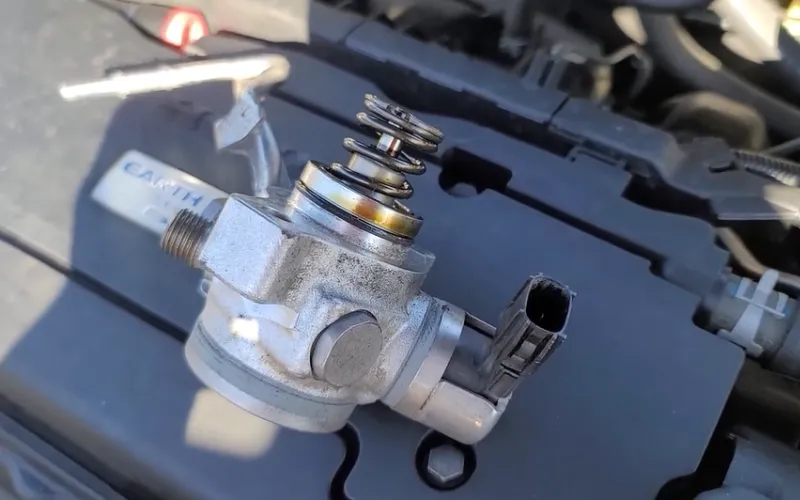
If the live data looks erratic, or codes like P0191 or P0193 are also stored, test the fuel rail pressure sensor. Replace it only after the wiring checks out.
Step 1: Look for the Fuel Pressure Sensor
On the 6.7 Powerstroke, the fuel rail pressure sensor is mounted on the engine’s high-pressure fuel rail. It is not in the fuel tank, and you do not remove the fuel pump to reach it (Ford 6.7L diagnostic information). Check the service manual for your model year for the exact spot.
Step 2: Remove the Faulty Fuel Pressure Sensor
Because the sensor threads into the high-pressure rail, only remove it with the engine off and the system depressurized, following the service procedure. Disconnect the battery and unplug the sensor connector first. If you do not have the procedure or the right tools, have a shop do this step.
Step 3: Impose the New Sensor
Install the new sensor to the specified torque. Reconnect the connector and the battery. Prime the system, start the engine, and check for leaks. Then confirm with a scan tool that actual rail pressure tracks desired pressure.
If the sensor is good, the problem may be the pressure control valve on the rail or the volume control valve on the CP4.2. Either one can cause low rail pressure. Testing them usually needs a capable scan tool and the Ford diagnostic procedure.
7. Replace the Faulty PCM
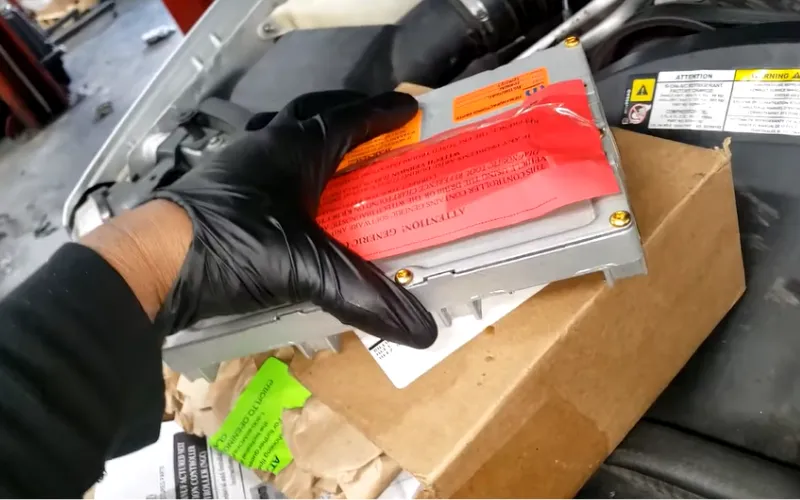
A bad PCM is the least likely cause. Suspect it only after every other part and circuit tests good. To check, compare a mechanical fuel pressure reading with what the PCM reports. A shop can also check for PCM software updates first, which may solve the problem without a new module.
If the PCM truly needs to be replaced, here is what to expect:
Step 1: Disconnect the battery and locate the PCM
Disconnect the battery before you touch the PCM. Find the PCM location for your model year in the service information. Then unplug its electrical connectors.
Step 2: Remove the bad PCM
After that, take out the old PCM. To do so, remove all the bolts that hold the part in the right place. You can do it using a screwdriver or socket wrench.
Step 3: Install and program the new PCM
A replacement PCM is not plug-and-play. New or used, it must be set up for your truck with Ford software (FDRS/IDS) using the VIN and as-built data. The PATS anti-theft system must also be reset, or the keys relearned, before the engine will start (Lake City Performance). A dealer or a shop with the right tools usually does this.
How Much Does It Cost To Fix 6.7 Powerstroke p0087 Code?
The cost depends on the cause. Labor rates also vary by location and shop type. Here is how the repairs compare, from least to most expensive:
- Fuel filters and priming: the lowest-cost fix and a common DIY job.
- Wiring or connector repair: usually low parts cost, but diagnosis time adds up.
- Rail pressure sensor or control valve: moderate cost; often needs shop tools.
- Lift pump or DFCM: higher parts cost, but on the low-pressure side.
- PCM replacement: includes the module plus programming and PATS setup.
- CP4.2 failure with contamination: the most expensive case, because more than the pump may need replacing.
Get a written estimate after diagnosis, not before. Paying for proper diagnosis is usually cheaper than guessing at parts.
Can You Drive Your 6.7 Powerstroke With Code p0087?
Only for a short distance, and only if the truck runs normally. P0087 can cause drivability problems such as power loss and stalling, which are unsafe in traffic. Continued driving can also make an existing fuel system problem much more expensive, especially if the CP4.2 pump is involved.
When should you stop driving and tow the truck?
Stop driving and arrange a tow if any of these apply:
- The engine stalls, loses power suddenly, or will not restart.
- You smell fuel or see a leak.
- You found shiny metal in the fuel filter or filter base.
- The water-in-fuel warning is on and draining the separator does not clear it.
- The code returns right after new filters and proper priming.
If the truck runs normally and the code set once, drive gently and only as far as needed to get it checked. Avoid towing loads or heavy throttle until the cause is found.
FAQs
We just finished learning what the code p0087 means on 6.7 Powerstroke and what the reasons and solutions are for the code. Do you have some other questions? Well, we also have the answers below:
What Are The Other Error Codes Associated With The Fuel Rail System?
Apart from p0087, there are some other diagnostic trouble codes that stand for the fuel rail system problem. The error code p0191 is set when there is an oddity in the fuel pressure readings, and p0088 will log when the fuel pressure is higher than the required level of fuel pressure.
What Controls 6.7 Powerstroke Engine Fuel Rail Pressure?
The PCM controls fuel rail pressure on the 6.7 Powerstroke with two valves. The volume control valve on the CP4.2 pump meters how much fuel enters the pump, and the pressure control valve on the fuel rail regulates rail pressure. The fuel rail pressure sensor reports actual pressure back to the PCM.
What Causes Low Fuel Rail Pressure On 6.7 Powerstroke?
Common causes include clogged fuel filters, water or gelled fuel, a weak lift pump, a failing CP4.2 high-pressure pump, fuel line leaks, a faulty volume control valve or pressure control valve, a bad rail pressure sensor, and wiring faults. The 6.7L does not use a conventional fuel pressure regulator.
Conclusion
P0087 on the 6.7 Powerstroke means rail pressure is lower than the PCM wants. Diagnose in order: codes and live data, filters, fuel quality, lines, wiring, then sensors, valves, pumps, and finally the PCM. If you are not experienced with diesel fuel systems, have an assistant or a shop help. The high-pressure side is dangerous to open.
The p0087 code is something no 6.7 owner wants to face. The best approach is to prevent it.
Change both fuel filters on schedule, and sooner under severe service or with biodiesel blends. Prime the system properly after every filter change. Drain the water separator when the warning appears, buy fuel from busy stations, and avoid running the tank very low. Keeping water and air out of the fuel is the best way to protect the CP4.2 pump.
- Read Also>>What Does P2291 Code Mean on 6.4 Powerstroke? Cause & Fix
- Read Also>>What Does P0069 Code Mean On 6.0 Powerstroke? Cause & Fix
- Read Also>>What Does P228F Code Mean On 6.7 Powerstroke? (Cause & Fix)
- Read Also>>What Does P2285 Code Mean On 6.0 Powerstroke? Cause & Fix
- Read Also>>How to Fix P1000 Code On Ford F150? (Complete Solutions)
