
Quick answer: Avoid the 2009, 2010 and 2012 Acura TSX first, then the 2005 and 2006 if you can. The 2009-2010 cars are known for excess oil consumption, and the 2012 for power steering failure. The 2007, 2013 and 2014 model years are the safer used picks, based on CarComplaints.com owner data.
The Acura TSX was sold under the Honda Accord name in other markets. It’s a compact executive car series manufactured and sold by Honda Motors between 2003 and 2014.
Owner complaints are not spread evenly across those years. 2009, 2010, and a few more TSX models ended up having the real engine, steering, and interior concerns.
Below, you’ll find what went wrong in each year, what the common repairs cost, and how to check a used TSX before you buy one.
Which Acura TSX Years Should You Avoid?
Honda introduced the first Acura TSX model in April 2003 as a 2004 model, which was originally a rebadged version of the Honda Accord 2.4 Type-S vehicle with an additional interior concept taken from the Japanese domestic market (JDM).
Acura TSX has been one of Honda’s well-received series due to its excellent fuel efficiency, great control over steering handling, incredible engine performance, advanced safety features, and decent resale value.
However, some of its model years are known for being troublesome. When you shop for a used Acura TSX, remember to avoid these years:
- 2005 Acura TSX
- 2006 Acura TSX
- 2009 Acura TSX
- 2010 Acura TSX
- 2012 Acura TSX
As of November 2026, CarComplaints.com’s Acura overview lists the TSX 5th of 21 models by complaint count, with 166 complaints.
Most highlighted issues of those TSX models were power steering failure, excess oil consumption, and transmission failure.
How Does Each TSX Model Year Compare?
| Model year | Verdict | Main concern |
|---|---|---|
| 2004 | Inspect carefully | Most electrical complaints of any year, but only 3 |
| 2005 | Avoid | Steering and transmission |
| 2006 | Avoid | Steering and interior |
| 2007 | Safer pick | No major pattern flagged |
| 2008 | Caution | Steering |
| 2009 | Avoid | Oil consumption, brakes and interior |
| 2010 | Avoid | Oil consumption and rear brake wear |
| 2011 | Caution | Covered by the oil consumption extension, so test oil use |
| 2012 | Avoid | Power steering failure |
| 2013 | Safer pick | No major pattern flagged |
| 2014 | Safer pick | No major pattern flagged |
2005 Acura TSX Problems:
2005 Acura TSX owners seemed to encounter significant steering and transmission issues since most complaints were against those areas.
Several 2005 TSX users reported steering issues such as faulty or broken power steering hose, power steering pump failure, leaked steering boot seal, and worn-out rack and pinion. They also reported symptoms like transmission whining and complete failure.
Other highlighted 2005 model problems were automatic door and passenger door lock broke, ECM or PCM computer failure, navigation system malfunction, and piston oil rings internally consuming all oil.
2006 Acura TSX Problems:
2006 Acura TSX owners most commonly complained about steering and interior issues.
2006 TSX users reported problems like power steering fluid leak, steering rack, and pinion failure. They also reported issues like broken automatic door lock, hands-free phone link causing a dead battery, inoperable reading lights, and seats that move erratically.
Other mostly 2006 TSX highlighted issues were oil gasket leakage, rough idle, total suspension failure, paint peeling off, the parasitic drain of vehicle battery due to faulty hands-free links, and air compressor failure.
2009 Acura TSX Problems:
The 2009 TSX sits just behind the 2010 on the CarComplaints.com model-year chart, with 34 complaints to the 2010’s 35. Its problems also cover several different systems.
2009 TSX owners reported engine troubles such as excess oil consumption, engine rattles at cold start, noisy pulley, and bad VTC Actuator.
2009 model users also mentioned interior issues like power or electric door locks malfunction, cup holders not closing, and dash lights erratically blinking while driving. They also mentioned premature seat deterioration and stereo speakers not working.
Acura 2009 TSX vehicle users also reported symptoms like brake wearing prematurely and faulty brake pedals that tend to go to the floor.
Other common highlighted issues were unusual noise during accelerating, battery failed the load test, power steering failure, and rough shifting.
2010 Acura TSX Problems:
2010 TSX owners mainly complained about engine and brake issues.
Acura 2010 TSX owners mostly mentioned encountering symptoms like excess oil consumption, cold vehicles that required a jump start, or tended to not start in the cold weather. Some also noticed unusual VTC Actuator noise when cold starting and premature rear brake wear.
Other highlighted notable issues were device connectivity not working, A/C not working properly, and a faulty windshield wiper that tends to throw water onto the driver’s side.
2012 Acura TSX Problems:
Most of the 2012 complaints were against the steering, where users noticed common symptoms like power steering and ECU failure.
2012 TSX users also reported brakes failure during cold weather, difficult cold start, or visible hesitations.
Other common issues with the Acura 2012 TSX were very uncomfortable seats, paint fading or peeling off, rodents chewing the wiring, and transmission failure.
What About the 2004, 2008 and 2011 TSX?
These three years are not on the avoid list, but that does not make them problem-free.
- 2004: It has the most electrical complaints of any year, but the count is only 3. Test all electrical features before you buy.
- 2008: Steering complaints stand out, as they do for 2005, 2006 and 2012. The data in this guide flags 2008 for steering alone, which is why it is a caution year and not an avoid year. Inspect the steering as closely as you would on a 2012.
- 2011: Four-cylinder cars fall under Honda’s oil consumption warranty extension, along with the 2009 and 2010. Test oil use before you buy.
What Are The Worst Years Of Acura TSX?
As of November 2026, CarComplaints.com rates the 2012 Acura TSX as the worst model year. The 2010 has the most complaints on its model-year chart (35), just ahead of the 2009 (34).
Based on the ACURA TSX MODEL YEAR COMPARISON graphical presentation, the following Acura TSX years produced some of the worst models-
Is the 2012 Acura TSX a Good Car?
The 2012 is the riskiest TSX to buy on complaint data. CarComplaints.com lists 176 owner complaints, including 99 NHTSA steering complaints. The top listed problem is power steering failure, at about $1,500 and about 69,000 miles.
Only consider a 2012 if the steering passes a professional inspection and the seller can show records of any steering repairs.
The 2006 Acura TSX:
CarComplaints.com lists the 2006 models with 91 owner complaints, four recalls from the National Highway Traffic Safety Administration (NHTSA), and 44 technical service bulletins (TSBs).
The 2006 Acura TSX most highlighted symptoms were the rack and pinion failure (average fixing cost $1,300), power steering fluid leak (average fixing cost $900), and total suspension failure (average fixing cost $1,600).
The 2009 Acura TSX:
CarComplaints.com lists 147 owner complaints, six NHTSA recalls and 69 technical service bulletins (TSBs).
2009 Acura TSX most highlighted complaints were excess oil consumption, power steering failure (typical fixing cost $1,800), and premature brake wear (typical fixing cost $200).
The 2010 Acura TSX:
CarComplaints.com lists the 2010 TSX with 118 owner complaints, seven NHTSA recalls and 83 technical service bulletins (TSBs).
The top listed 2010 Acura TSX problems are excessive oil consumption, premature rear brake wear (average repairing cost $200), and device connectivity not working.
How Far Can You Trust TSX Complaint Counts?
Use complaint counts to spot patterns, not to rank close years. They have real limits:
- Small samples: A gap of one or two complaints means little. The 2010’s 35 and the 2009’s 34 are effectively a tie.
- No sales adjustment: A year that sold more cars can collect more complaints without being worse.
- No age adjustment: Older cars have had more time to fail. Newer cars have had less.
- Self-reported data: Owners with problems are the ones who file complaints.
- Totals vary by page: The model-year chart and the individual year pages show different numbers, so compare like with like.
Most Common Problems Of Acura TSX:
Is the Acura TSX a reliable car? It depends on the model year. Its most serious complaints cluster around oil use on the 2009-2010 cars and steering on the 2005, 2006, 2008 and 2012 cars. Let’s look at the problems that make some TSX models worth avoiding-
1. Which Acura TSX Years Burn Oil?
The 2009 and 2010 TSX are the years most linked to excess oil consumption. As of November 2026, CarComplaints.com’s model-year counts add up to 47 engine complaints for the TSX.
Based on the Acura TSX Year-By-Year Engine Problems chart, engine troubles appear to some degree in almost all TSX model years.
But issues were most severe in Acura’s 2009 and 2010 TSX models.
The most highlighted symptom was excess oil consumption. Average reported mileage is about 73,000 miles for the 2010 TSX and about 84,000 miles for the 2009 TSX.
Another most reported issue was that the piston oil rings internally consume all vehicle oil, which most users noticed after 124,000 miles, and the repair cost was around $2,700.
Does Honda Still Cover TSX Oil Consumption Repairs?
Probably not on most cars now, because the coverage has a time limit. Honda’s Service Bulletin 13-006 extended warranty coverage for piston rings and pistons on 2009-2011 TSX four-cylinder cars. Coverage lasts 8 years from the original purchase date or 125,000 miles, whichever comes first.
Eligibility is checked by VIN. Vehicles declared a total loss, sold for salvage by a financial institution or insurer, or carrying a branded title are excluded.
A 2011 car bought new in 2011 would have reached 8 years in 2019, so don’t count on this coverage. An Acura dealer can check the VIN and may also show whether the repair was already done. A car with that work on record is a better buy than one with no history.
2. Does the Acura TSX Have Power Steering Problems?
Yes. Steering is one of the TSX’s two biggest complaint areas. As of November 2026, CarComplaints.com’s model-year counts add up to 36 steering complaints.
According to the Acura TSX Year-By-Year Steering Problems chart, steering malfunction or failure issues were also commonly noticed in almost all the TSX models.
But problems seemed relatively severe in the 2005, 2006, 2008, and 2012 Acura TSX models.
One of the most highlighted symptoms was power steering failure, which commonly occurs at 69,000 miles and requires $1,500 to fix.
Another most reported issue was the check power steering indicator light staying on, which commonly occurs at 82,000 miles and requires approx. $3,000 for repairing.
Consumers also mostly highlighted rack and pinion failure, which commonly arises at 94,000 miles and costs approx. $1,300 to fix.
How Many Miles Can an Acura TSX Last?
There is no verified lifespan figure for the TSX. Condition and maintenance history tell you more than the odometer. Complaint data does show when the expensive problems tend to appear, so you can judge what a car may need next.
| Problem | Typical mileage | Typical repair cost |
|---|---|---|
| Power steering failure | About 69,000 | About $1,500 |
| Excess oil consumption | About 73,000 (2010), 84,000 (2009) | Not listed |
| Check power steering light stays on | About 82,000 | About $3,000 |
| Rack and pinion failure | About 94,000 | About $1,300 |
| Piston oil rings consuming oil | About 124,000 | About $2,700 |
A car past these mileages with records of the repair is often a safer bet than a car approaching them with no history.
How Do TSX Generations and Engines Differ?
The TSX had two generations, and their main complaint patterns differ.
- 2004-2008: Complaints lean toward steering, especially on the 2005, 2006 and 2008.
- 2009-2014: Early cars lean toward oil consumption. The 2012 stands out for steering. The 2013 and 2014 are the safer picks.
A 3.5-liter V-6 became available for the 2010 model year. Honda’s oil consumption extension applies to the four-cylinder cars only.
The 2014 TSX offered these combinations:
- 201-hp 2.4-liter four-cylinder: 5-speed automatic standard. A 6-speed manual was a no-cost option on the Special Edition sedan only.
- 280-hp 3.5-liter V-6: 5-speed automatic only.
- Sport Wagon: Four-cylinder only.
Does the TSX Sport Wagon Share the Sedan’s Problems?
Assume it can. The Sport Wagon arrived for 2011 and went on sale in the US in December 2010. The complaint figures in this guide are grouped by model year, not body style, so they can’t show whether the wagon is better or worse. Use the same checks as you would on a sedan of that year.
Is the Acura TSX Just a Honda Accord?
In part, yes. The first TSX was a rebadged Honda Accord 2.4 Type-S from Japan’s domestic market, and the car was sold under the Accord name in other markets. In the US, it was sold as an Acura.
Which Acura TSX Years are Safe to Buy Used?
According to the same Acura TSX Model Year Comparison, the following model years are considered the safer choices-
- 2007 Acura TSX
- 2013 Acura TSX
- 2014 Acura TSX
The 2007 Acura TSX features a high-revving engine, razor-sharp handling, smooth six-speed manual transmission, very refined and attractive interior to offer a dynamic driving experience.
2013 Acura TSX is built with excellent quality materials and offers a spacious interior, sporty handling as well as lots of impressive standard technology and safety features.
The 2014 Acura TSX is designed with a stylish appearance and high-end interior quality. It offers a four-cylinder or V-6 engine and stays flat during aggressive cornering. A six-speed manual was available only on the four-cylinder Special Edition sedan.
What Is the Best Acura TSX Year to Buy Used?
The 2013 and 2014 are the best fit for most buyers, since they are the newest cars and sit outside the main complaint clusters. Use these rules to choose:
- Want the newest car: Choose a 2014.
- Want a V-6: Look for a 2013 or 2014, and expect an automatic.
- Want a manual: A 2007 is the easier find. On a 2014, you need the four-cylinder Special Edition sedan.
- Found a cheap 2009, 2010 or 2012: Only buy it with repair records and a clean inspection.
A safer year means a better record, not a guarantee. Inspect any TSX before you pay for it.
How Do You Check a Used TSX for Open Recalls?
Run the car’s VIN before you buy. CarComplaints.com lists 4 NHTSA recalls for the 2006 TSX, 6 for the 2009 and 7 for the 2010, so a used car may have unfinished recall work.
- Find the 17-character VIN on the driver’s side of the dashboard or on the door jamb.
- Enter it in the recall lookup on NHTSA.gov. The result shows any open safety recall tied to that car, including airbag recalls.
- Ask an Acura dealer to confirm the result and show which recall work has been completed.
What Should You Check Before Buying a Used TSX?
Focus on the failures owners report most. Walk away if the seller won’t allow these checks.
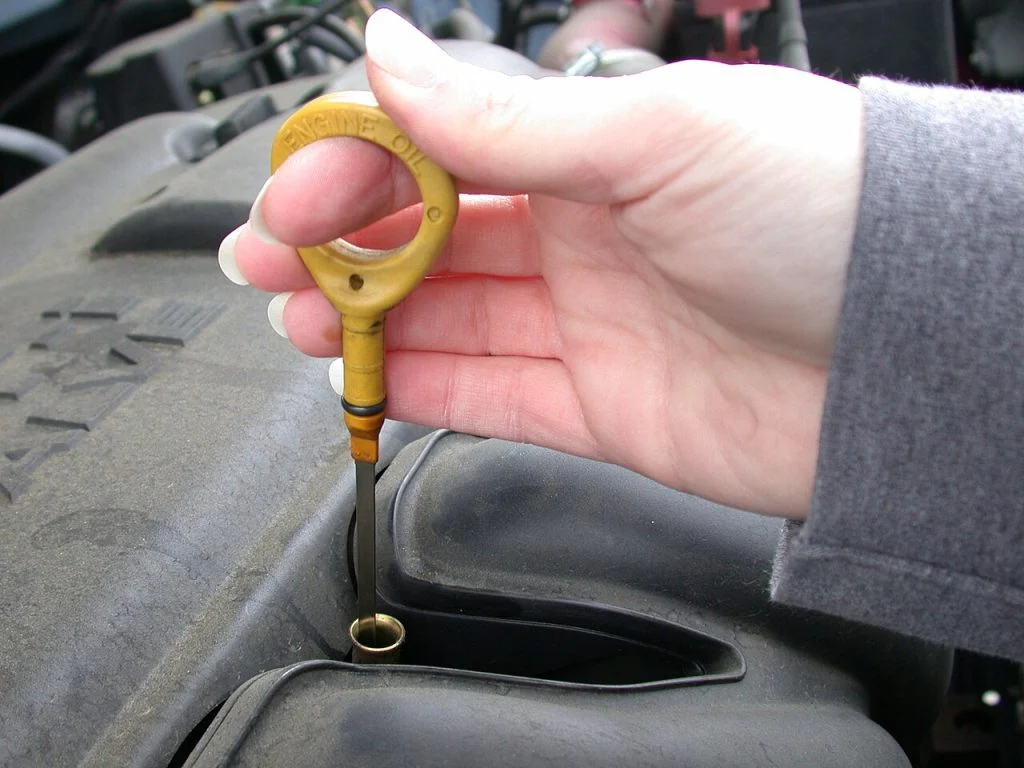
- Measure oil use. Check the dipstick on level ground and note the odometer. If you can, recheck after a set distance. A low level at inspection is a warning sign. Also ask how often the owner adds oil.
- Hear a true cold start. Ask the seller not to warm up the car. A rattle at cold start can point to the VTC actuator, a known complaint on 2009-2010 cars.
- Inspect the power steering. Look for fluid leaks at the hoses, pump and rack boots. Confirm the power steering light goes off. Turn the wheel fully each way and feel for stiffness or noise.
- Check the brakes. Measure rear pad wear, especially on 2009-2010 cars. Press the pedal and make sure it stays firm.
- Test the transmission. Listen for whining and watch for rough shifts on the test drive.
- Test the electrical items. Try the door locks, hands-free link, navigation, stereo and A/C. Have the battery tested, since a hands-free fault can drain it on 2006 cars.
- Read the service records. Look for regular oil changes and any piston ring, power steering or rack work.
- Get an independent inspection. Have a mechanic put the car on a lift before you pay.
Frequently Asked Questions (FAQs)
Which Year’s Acura TSX Have Most Interior Problems?
As of November 2026, CarComplaints.com shows the most interior accessory complaints for the 2009 (7) and 2006 (6) TSX. That is 13 combined, out of 22 across all model years.
Which Year’s Acura TSX Have Most Brakes Problems?
As of November 2026, CarComplaints.com shows the most Acura TSX brake complaints for the 2009 (7) and 2010 (6) models. The total across all model years is 19.
Which Year’s Acura TSX Have Most Electrical Problems?
As of November 2026, CarComplaints.com lists the most Acura TSX electrical complaints for 2004 (3), followed by 2005, 2007 and 2012 (2 each). The listed years add up to 14 complaints.
Conclusion
Since Honda Motors discontinued the Acura TSX series in 2014, you can only buy one used now, and no one wants to purchase a problematic vehicle, even a used one.
Start with the 2007, 2013 or 2014. Be careful with the 2005, 2006, 2009, 2010 and 2012. Whatever year you choose, check the oil use, the steering and the recall status before you pay.
Related Posts:
