

Quick answer: A P0101 6.0 Powerstroke code means the mass air flow (MAF) signal is outside the expected range. It does not prove the sensor is bad. Check the air filter, intake boots and connector first. Then clean the sensor with MAF-safe cleaner, test the circuit and live data, and replace it only if those checks justify it.
What does P0101 mean on a 6.0 Powerstroke?
P0101 is a mass air flow range/performance code. It sets when the MAF signal is out of the expected range. Treat it as a plausibility problem: the reading does not make sense to the engine computer, but the cause is unknown until testing proves the sensor bad.
Air leaks, airflow restrictions, wiring faults and EGR problems can also set this code. Buying a sensor first can mean paying for a part that never fixes the truck.
The best first move costs little. Inspect the intake path and MAF connector, then clean the sensor with MAF-safe cleaner before you buy parts.
What symptoms can P0101 cause on a 6.0L?
P0101 can come with a check engine light and drivability complaints, but symptoms alone cannot identify the failed part. Use them as clues, then test.
| What you find | What it points toward |
|---|---|
| Warning light with P0101 and a visibly dirty sensor, oily filter, torn boot or poorly seated filter | Airflow or MAF sensor fault |
| Poor drivability, low power, rough idle, hesitation or smoke, especially with P0401 or P0402 | Possible sticking EGR valve |
| Symptoms that come and go when the MAF harness is moved | Possible connector or wiring fault |
MAF sensor symptoms on a diesel overlap with many other faults. Low power, for example, does not tell you which part caused it.
Before you clear anything, record the freeze-frame data and every stored code. That information shows the conditions when the code set, and clearing codes can erase it.
What causes P0101 on a 6.0 Powerstroke?
The general causes of P0101 are mostly problems with the sensor, the air path or the circuit. These causes are not specific to the 6.0L, so confirm each one by testing.
| Cause | Why it can set P0101 | How to check it | Typical fix |
|---|---|---|---|
| Dirty or failed MAF sensor | The sensor cannot measure airflow correctly | Inspect the element and compare live data | Clean it, or replace it if damaged or still faulty |
| Torn or loose intake boot | Air can enter without being measured | Inspect boots, clamps and joints by hand and with a light | Reseat or replace the boot |
| Clogged or poorly fitted air filter | Airflow is restricted or disturbed | Inspect the filter, seal and housing | Replace or reseat the filter |
| Over-oiled reusable filter | Oil can contaminate the sensor | Look for oil on the filter, housing and sensor | Correct the filter oiling and clean the sensor |
| Connector or wiring fault | The sensor signal, power or ground can be disrupted | Check pins, corrosion, reference voltage and ground | Repair the connector or circuit |
| Stuck-open EGR valve | Exhaust can enter the intake when it should not | Scan for related codes and inspect the valve | Clean or replace the valve |
| Restricted exhaust | Flow through the engine is reduced | Inspect the exhaust and follow Ford service tests | Repair the restriction found |
Gas-engine caution: Many P0101 pages tell you to check the throttle body, PCV system, fuel trims or catalytic converter. Treat that as generic or gas-engine guidance. Do not apply it to a 6.0L unless Ford service information confirms it for your truck.
Can a dirty MAF sensor cause P0101 on a 6.0L?
Yes. A dirty MAF sensor is a listed cause of P0101. Because cleaning is cheap, it makes sense to try it before replacing an intact sensor.
Can an oiled air filter cause P0101?
Yes. Oil from an oil-soaked filter can contaminate the sensor and is a listed cause of the code. Check any reusable filter for excess oil, and fix that problem so the sensor does not get dirty again.
How do you diagnose P0101 step by step?
Work from the cheapest check to the most involved. Stop when you find a clear fault, fix it, and retest.
- Scan for all codes and save the freeze-frame data.
- Inspect the air filter and its housing.
- Inspect the intake boots, clamps and connections.
- Check the MAF element for dirt, oil or damage. Clean it if it is dirty but intact.
- Inspect the connector for loose pins or corrosion.
- Verify the sensor’s reference voltage and ground.
- Compare live MAF data with the correct specification or a known-good sensor.
- Evaluate the EGR valve.
What should you check first?
Start with the stored codes, then look at the air path. Make sure the filter is clean, seated correctly and not over-oiled. Follow the intake path by hand and look for cracks, loose clamps and boots that have slipped out of place.
How do you test MAF wiring?
Unplug the connector with the key off and look for loose pins or corrosion. Check nearby wiring for rubbing, heat damage or broken insulation. Then use a multimeter to verify reference voltage and ground.
Use the Ford wiring diagram and service information for your exact truck. This guide does not list voltages or pinouts because no reliable 6.0-specific values were verified. If power or ground is wrong, repair the circuit before you replace the sensor.
How do you read live MAF data?
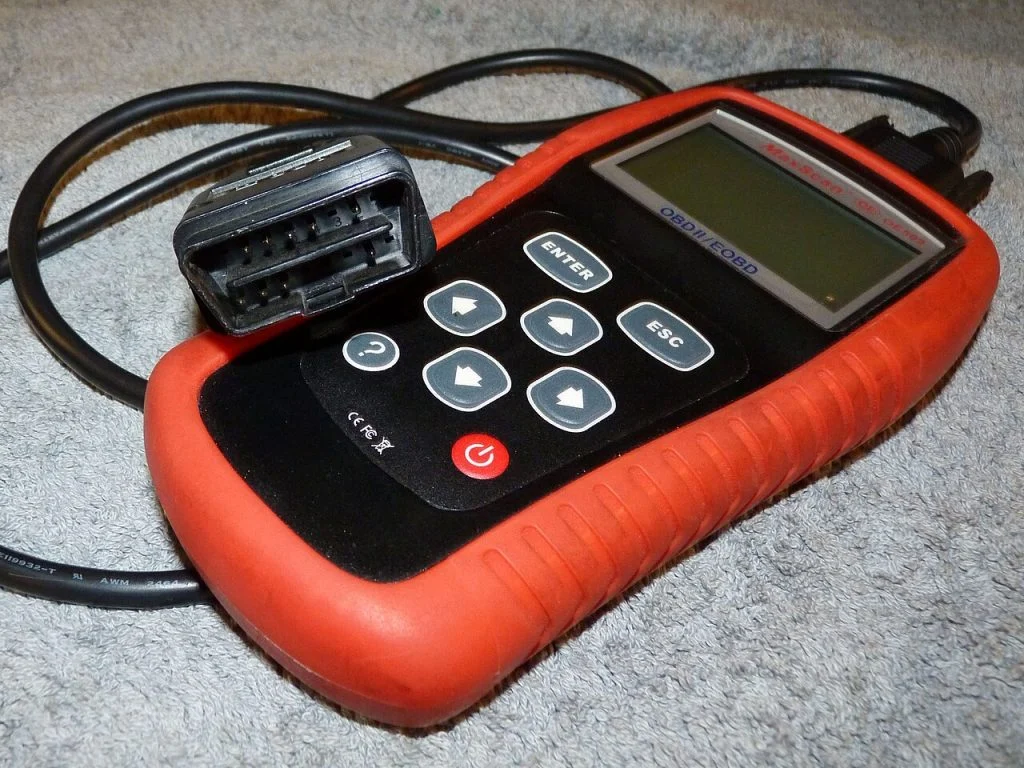
Park the truck, set the parking brake and connect a scan tool that shows MAF data. Record the reading at about 1,000, 2,000 and 3,000 RPM. Compare those P0101 live data readings with the Ford specification or a known-good sensor under the same conditions.
Airflow should increase as RPM rises. A reading that stays flat, drops out or jumps around deserves a closer look. Do not rely on MAF voltage or g/s numbers from generic charts, because they may not apply to the 6.0L.
How do you clean the MAF sensor safely?
Remove the sensor and spray only the sensing element with dedicated MAF cleaner. These steps follow CRC’s MAF cleaning procedure. Confirm the sensor’s location and mounting on your truck with Ford service information, since generic guides may describe a different layout.
- Turn the engine off and remove the key.
- Unplug the connector by its body, not its wires.
- Remove the sensor from the intake path.
- Hold the can upright, 4-6 inches from the sensor.
- Spray the hot wires or plate in short bursts, about 10-15 sprays total.
- Let the sensor air-dry completely.
- Reinstall the sensor and plug in the connector.
Warnings:
- Never touch the sensing wires or film.
- Do not use brake cleaner, carburetor cleaner or household solvents.
- Do not use cotton swabs or cloths.
- Do not dry the sensor with compressed air or a hair dryer.
- Do not overtighten the mounting screws.
MAF cleaner is highly flammable. Use it outdoors or in a well-ventilated area, away from ignition sources.
Could a sticking EGR valve be behind P0101?
Yes. A stuck-open EGR valve is a listed cause of P0101, and the 6.0L has a known carbon problem in this area. Its EGR valve sits at the front of the intake manifold, where soot, blow-by oil vapor and other deposits can make it stick open or closed.
Use this rule: if P0401 or P0402 appears with P0101, or the intake path and MAF check out, inspect the EGR valve next. Driving Line says a valve stuck open sets P0402 and a valve stuck closed sets P0401.
For EGR-specific diagnosis, see our guides to [LINK: P0401 article] and [LINK: P0405 article].
Should you clean or replace the MAF sensor?
Clean the sensor if the element is dirty but intact. Replace it if the element is damaged, or if the code returns after the circuit and air path have tested good.
| What you find | What to do |
|---|---|
| Element is dirty but intact | Clean it and retest |
| Element is damaged or corroded | Replace the sensor |
| Power, ground or wiring is bad | Repair the circuit first |
| Code returns after cleaning, with the circuit and air path verified good | A new sensor is justified |
If you need a new sensor, confirm it is listed for your truck’s exact year and engine. Replacement sensors are sold for 2003-2007 Ford 6.0L trucks, but check the fitment details before you order.
Cleaning is the low-cost first step. Family Handyman lists about $15 for cleaning supplies and cites AAA shop labor rates of $47 to $215 per hour. Check a current listing for the price of a 6.0L sensor, since prices change.
Will P0101 clear itself after cleaning the MAF sensor?
Do not count on it. To verify the repair, clear the code with a scan tool, complete a drive cycle and rescan. If the code or symptoms return, the sensor may need replacement, provided the circuit and air path have already tested good.
Can you drive with a P0101 code?
If the truck runs normally, a short trip to a safe place for testing may be reasonable. Diagnose it soon, because the code alone does not show how serious the cause is. No verified mileage limit or guaranteed safe range exists for driving with P0101.
Stop driving and arrange a tow or inspection if you notice:
- Stalling
- Severe power loss
- Heavy smoke
- A flashing warning light or a new warning light
How do you keep P0101 from coming back?
Keep the air path sealed and the sensor clean:
- Use a quality air filter that fits and seals correctly.
- Oil reusable filters carefully and avoid over-oiling.
- Check intake boots and clamps when you service the filter.
- Clean the MAF sensor about once a year or at filter changes, as CRC suggests. Clean it more often in dusty conditions or with an aftermarket filter.
The 6.0L also benefits from EGR upkeep. One Driving Line writer suggests cleaning the valve every other oil change or yearly, and no later than 20,000 miles. That is a specialist recommendation, not a Ford service interval.
Frequently Asked Questions About P0101 on a 6.0 Powerstroke
Does P0101 always mean the MAF sensor is bad?
No. P0101 shows that the MAF signal is outside the expected range, but it does not prove the sensor failed. Air leaks, airflow restrictions, wiring faults and EGR problems can set the same code. Inspect the air path and connector, clean the sensor, and test the circuit before buying a part.
Can a torn intake boot cause P0101?
Yes. A torn or loose intake boot is a listed cause of P0101 because air can enter the engine without being measured. Inspect the boots, clamps and joints by hand and with a light. If you find a loose or damaged section, reseat or replace the boot, then retest.
Can you use brake cleaner on a MAF sensor?
No. Do not use brake cleaner, carburetor cleaner or household solvents on a MAF sensor. Use only a dedicated MAF cleaner, spray it on the sensing element in short bursts, and let the sensor air-dry completely. Do not touch the sensing wires or film, and do not wipe them with swabs or cloths.
Should you clear P0101 before diagnosing it?
No. Record the freeze-frame data and every stored code first, because clearing codes can erase that information. Freeze-frame data shows the conditions when the code set, which helps guide testing. Clear the code with a scan tool only after the repair, then complete a drive cycle and rescan.
Should you trust generic MAF data charts on a 6.0 Powerstroke?
No. Generic MAF voltage or g/s charts may not apply to the 6.0L. Record live MAF data at about 1,000, 2,000 and 3,000 RPM, then compare it with the Ford specification or a known-good sensor under the same conditions. Airflow should increase as RPM rises.
How often should you clean a MAF sensor on a 6.0 Powerstroke?
Clean the MAF sensor about once a year or at filter changes, as CRC suggests. Clean it more often if the truck works in dusty conditions or uses an aftermarket filter. Also check the intake boots and clamps when you service the filter.
