
Quick answer: The Audi TT years to avoid or inspect hardest are 2000-2004, 2016 and 2017. The 2001 has the most NHTSA complaints among the years compared here, at 132, while CarComplaints labels 2004 the worst. No year is automatically safe, so check recalls by VIN before you buy.
Audi is a premium brand, and the TT is its compact luxury sports model. It offers many premium features and a distinctive design.
The TT has nimble handling for a better driving experience. Precise steering and strong acceleration help the car move with ease. It comes with high-quality interior materials, comfortable front seats, and a range of sensible tech functions. Those strengths make it appealing as a used car.
However, there are some years that deserve extra caution when you buy a TT. In this article, I will tell you about them, what the recall and complaint records show, and how to check a specific car.
Which Audi TT Years Should You Avoid? (List of Years)
The years below have the most complaints, a poor third-party label, or serious safety recalls. Not all of them have the same issues, and a recall that was properly repaired is much less of a concern.
- 2000 Audi TT: It has 76 NHTSA complaints. Check the fuses, clutch and transmission closely.
- 2001 Audi TT: It has 132 NHTSA complaints, led by electrical problems. Some owners also reported large repair bills.
- 2002 Audi TT: Ignition coil and spark plug failures are the main concern. Certain aftermarket water pumps fitted to these cars were also recalled.
- 2003 Audi TT: Most NHTSA complaints involve the electrical system or power train, including transmission jerking and slipping.
- 2004 Audi TT: CarComplaints labels this the worst TT year.
- 2016 Audi TT: A fuel tank recall covers a possible fuel leak after a crash.
- 2017 Audi TT: It has three NHTSA recalls, including one for the driver’s airbag inflator.
What Is the Worst Year of the Audi TT?
The answer depends on the source. The 2001 TT has 132 NHTSA complaints, more than any other year in the table below. CarComplaints labels the 2004 as the worst year. If you are looking at either one, budget for a thorough inspection or keep shopping.
| Model year | NHTSA complaints | What stands out |
|---|---|---|
| 2000 | 76 | One of the earliest TT years |
| 2001 | 132 | Electrical system is the largest group, with 71 of 119 complete records reviewed |
| 2002 | 38 | Ignition coil and spark plug failures |
| 2003 | 18 | Seven electrical and six power train complaints |
| 2009 | 12 | Fewest complaints of the years compared here |
Use these counts as a warning sign, not a final score. Owners submit the complaints, the totals can change, and they are not adjusted for how many cars were sold.
What Are the Common Problems With the Audi TT?
The best-documented TT problems are electrical faults on early cars, ignition coil and spark plug failures, and transmission jerking or slipping. Recalls also cover fuel system parts, a driver’s airbag inflator and DSG transmission wiring. Which problem matters most depends on the model year.
What Makes These Audi TT Years Worth Avoiding?
Each of these years has specific issues that can raise your costs or affect safety. Here are the problems with each year in detail.
What Are the 2000 Audi TT Problems?
The 2000 TT comes from the model’s early years. The first-generation coupe launched in September 1998. NHTSA lists 76 complaints for this model year.
Repeated blown fuses at startup, clutch problems, and transmission oil leaks have been linked to this year. How common they are could not be confirmed, so treat them as items to check rather than proven patterns.
Before buying, ask whether any fuse has been replaced more than once. Look for oil leaks, and test every gear on a drive. Also get repair quotes and confirm parts availability for any fault you find.
What Are the 2001 Audi TT Problems?
The electrical system is the biggest concern on the 2001 TT. It accounts for 71 complaints in the 119 complete NHTSA records reviewed, the largest group for this year.
Repair costs can also be high. Some 2001 TT owners told NHTSA about individual repair bills or quotes of $1,000, $2,000, $3,650 and about $8,000. Costs vary by repair, so these figures are examples and not typical prices.
Some reports also mention engine problems, oil leaks and stability control computer faults. How often these happen could not be confirmed. Have a shop scan the car for stored fault codes and check for leaks. Given the complaint count, this is a year to skip unless the car has strong repair records.
What Are the 2002 Audi TT Problems?
Sometimes the ignition coil or spark plug fails abruptly, causing an engine misfire and turning on the check engine light. This is the best-supported engine complaint for the 2002 TT.
Some reports also describe a check engine light with no clear cause. A code reader can help separate a real fault from a false alarm.
Water pump parts need a close look too. Recall 14E007000 covers certain aftermarket Gates Tru-Flow water pumps fitted to cars including the 2002 TT. These pumps can develop pulley or sprocket microfractures that cause the timing belt to fail and may shut down the engine.
Slow or failing brakes have also been linked to this year, but this could not be confirmed. Have the brakes inspected on any older TT. Buy a 2002 only if the ignition and water pump history is clear.
What Are the 2003 Audi TT Problems?
Before pointing out the problems, you should know that the NHTSA has issued one recall for the 2003 Audi TT. One recall is not a reason to reject a car by itself, but you should confirm that it was completed.
Of the 18 NHTSA complaints for the 2003 TT, seven involve the electrical system and six involve the power train.
The power train complaints are mostly about transmission jerking or slipping, and several owners were told the transmission needed replacing. Ignition coil failure has also been linked to this year, but how widespread it is could not be confirmed.
Why Is the 2004 Audi TT on This List?
The 2004 TT is here because CarComplaints labels it the worst TT year. That ranking comes from a different source than the NHTSA counts above, so the two should not be compared directly. Give a 2004 the same careful inspection as a 2001.
What Are the 2016 Audi TT Problems?
The most significant problem on the 2016 TT is its fuel system. Recall 20V076000 covers fuel tank damage that can cause a fuel leak after a crash.
A leak after a crash increases the risk of fire. The recall does not mention engine overheating.
Fuel economy is not a major weakness on paper. The EPA rates the 2016 TT Coupe quattro and TT Roadster quattro at 23 mpg city, 30 highway and 26 combined.
Hence, you should not buy a 2016 TT unless the VIN check shows that the fuel tank recall has been completed.
What Are the 2017 Audi TT Problems?
Safety recalls are the main reason for caution on the 2017 TT.
Due to safety problems, it was recalled 3 times by the National Highway Traffic Safety Administration.
The airbag issue is one of the main safety concerns. Under recall 19V014000, the driver’s frontal airbag inflator can rupture on deployment and send metal fragments toward occupants. The remedy is a free inflator replacement.
Some reports also mention lighting faults tied to the electrical system, so test every light before you buy.
Fast wear of spark plugs and valve cover gaskets has also been reported, but it could not be confirmed as a cause of engine failures. Treat these parts as normal inspection items.
Which Audi TT Years Are Better to Buy?
The 2008 and 2009 TT are stronger choices than the years listed above, but neither is problem-free. Both have recalls that you should confirm were completed.
What Is the Most Reliable Audi TT Year?
No source reviewed for this article names one most reliable TT year. Of the five years compared above, the 2009 has the fewest NHTSA complaints, at 12. That is a good sign, but the condition and records of the actual car matter more.
Is the 2008 Audi TT a Good Buy?
The 2008 TT stands out for its looks and design. It offers quick acceleration, a fast gearbox and fluid handling.
Engine choice has a big effect on fuel costs. The 2008 TT was offered with a 2.0L four-cylinder rated 25-26 mpg combined or a 3.2L V6 rated 19-20 mpg combined.
It has two NHTSA recalls: 09V377000 for the fuel tank vent valve and 08V064000 for C-pillar trim clips. Check that both were completed by VIN before you buy.
Resale value could not be verified, so compare local listings to judge the price of a specific car.
Is the 2009 Audi TT a Good Buy?
The 2009 TT is a sporty car with a smooth, premium feel. It has the lowest complaint count of the years compared in this article.
It is offered with an automatic transmission, which makes it easy to drive.
The 2009 TT has no steering recall listed by NHTSA. However, one NHTSA owner complaint (ODI 10365258) reports that the brakes and power steering failed. It is a single report, but test both carefully on a drive.
The materials used in this car give it a premium look and feel.
Do not skip the recall check. The 2009 TT has two NHTSA recalls, including 09V333000, where the DSG transmission can suddenly shift to neutral. Confirm that both recalls were completed before you buy.
What About Audi TT Years Not Listed Here?
A year that is missing from this list has not been cleared. The 2005-2007, 2010-2015 and 2018-and-newer cars were not ranked here because no verified year-by-year comparison was available for them.
At least some of these years are affected by recalls. For example, the fuel tank vent valve recall covers certain 2006-2010 TT models. For any year, run the VIN and search NHTSA complaints for that model year.
Which Audi TT Recalls Should You Know About?
These are the main TT recalls covered in this article. This is not a full list for every model year.
| Campaign | Vehicles | Part | Risk | Remedy |
|---|---|---|---|---|
| 19V014000 | 2017 TT | Driver’s frontal airbag inflator | Can rupture and send metal fragments toward occupants | Free inflator replacement |
| 20V076000 | 2016 TT | Fuel tank | Possible fuel leak after a crash, raising fire risk | Ask an Audi dealer |
| 09V333000 | Certain 2009-2010 VW and Audi cars, including the 2009 TT, built September 2008 to August 2009 | DSG temperature sensor wiring | False high-temperature reading and sudden shift to neutral | Free transmission control module software |
| 09V377000 | Certain 2006-2010 A3, TT and TT Roadster, built September 2005 to August 2009 | Fuel tank ventilation valve | Fuel leak under extreme driving, with fire risk if an ignition source is present | Free valve replacement by dealers |
| 08V064000 | 2008 TT | C-pillar trim clips | See the NHTSA recall notice | Ask an Audi dealer |
| 14E007000 | Certain aftermarket Gates Tru-Flow water pumps, including pumps fitted to the 2002 TT | Water pump pulley or sprocket | Microfractures can cause timing belt failure and may shut down the engine | See the NHTSA recall notice |
How Do I Check If My Audi TT Has an Open Recall?
Enter the car’s 17-character VIN into the free NHTSA recall lookup. It shows whether that specific car has an unrepaired safety recall.
- Find the VIN on the driver’s side dashboard, the door jamb sticker or the registration.
- Go to the NHTSA recall page and enter the VIN.
- Read the result for any open recall.
- Call an Audi dealer with the VIN to confirm the repair status and book any open recall work.
A VIN search may not show recall 14E007000, because it covers an aftermarket part and not the car itself. On a 2002 TT, check the repair invoices for the water pump brand.
Are Audi TTs Expensive to Maintain?
They can be, especially when an older car needs a major repair. The clearest cost evidence here comes from 2001 TT owners, who reported individual bills or quotes from $1,000 to about $8,000. No verified average cost by year was available, so get a written quote for any fault found before you agree on a price.
When Should the Timing Belt Be Replaced on an Audi TT 1.8T?
Follow the Audi maintenance schedule for that exact engine and model year. A dealer can confirm the interval. This article does not give a mileage figure because the sources reviewed did not verify one.
If a seller has no proof of a recent timing belt service, assume it may be due and include the cost in your offer. Ask which water pump was installed, too, since a failed pump part can take the belt with it.
How Many Miles Can an Audi TT Last?
No verified lifespan figure is available for the TT. NHTSA complaint data and EPA ratings do not measure how long a car lasts. A complete service history and a clean inspection tell you more than the odometer alone.
What Should You Inspect Before Buying a Used Audi TT?
Check the recall status first, then pay an independent shop for a pre-purchase inspection. Use this list:
- Recalls: Run the VIN and ask for proof of completed work.
- Service records: Look for timing belt, water pump and transmission service.
- Fault codes: Scan for stored codes, especially misfires and electrical faults.
- Electrical system: Test the lights, gauges, windows, locks and warning lamps.
- Transmission: Feel for jerking, slipping or any sudden loss of drive.
- Leaks: Check under the car for oil and around the fuel system for any fuel smell.
- Brakes and steering: Confirm that both feel consistent on a test drive.
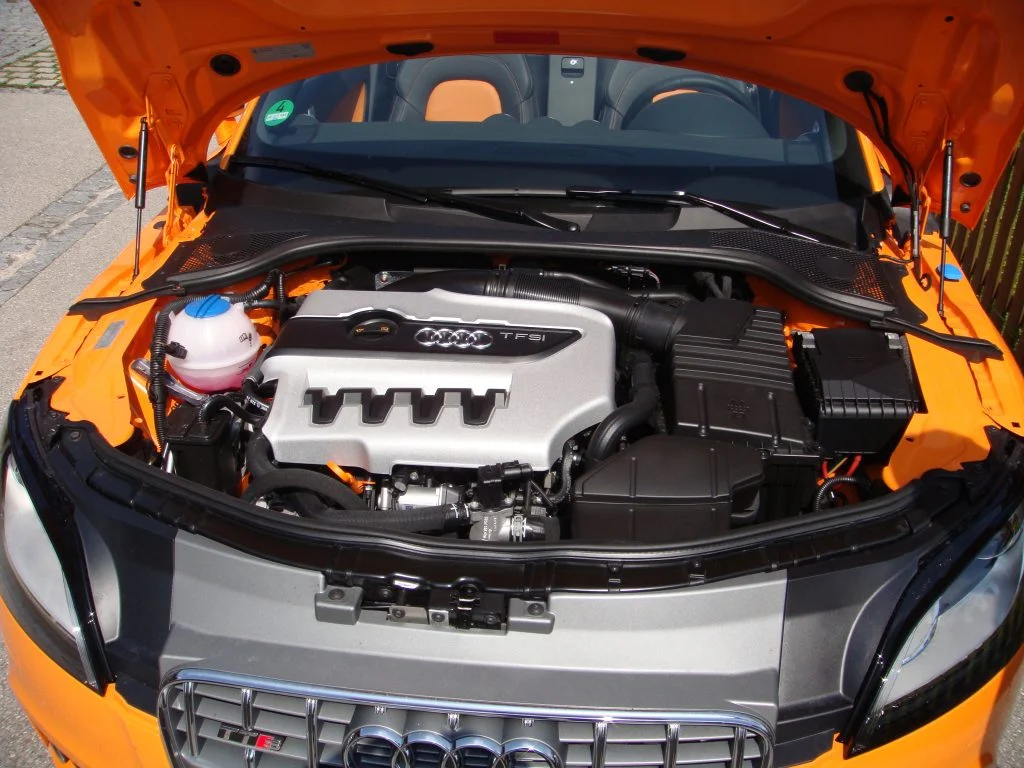
When Is an “Avoid” Year Still Acceptable?
An avoid year can still be a reasonable buy if the specific car has proof that its known problems were fixed.
- Consider it if: All recalls are complete, the records are detailed, and an independent inspection finds no major faults.
- Negotiate if: The car is sound but needs a documented repair, such as a timing belt service.
- Walk away if: The seller will not share the VIN, a safety recall is open and will not be fixed before sale, or the transmission jerks or slips.
Low mileage helps, but it does not replace records. Age and long periods of sitting can still cause problems.
Is a Used Audi TT a Good Car to Buy?
A used Audi TT can be a good buy if you choose the individual car carefully and can afford repairs. It suits buyers who value style and handling and are willing to check the records first.
Be most careful with the 2000-2004, 2016 and 2017 model years. The 2008 and 2009 are better places to start, as long as their recalls are complete and the car passes an independent inspection.
Related Posts:
- Which Audi Q5 Years You Should Avoid and Why? (Explained)
- Which Audi A4 Years You Should Avoid and Why? (Explained)
Frequently Asked Questions About Audi TT Years and Recalls
Do NHTSA complaint counts prove which Audi TT year is worst?
No, NHTSA complaint counts are a warning sign, not a final score. Owners submit the complaints, the totals can change, and they are not adjusted for how many cars were sold. Use them alongside recall records, service history and an independent inspection of the specific Audi TT you plan to buy.
Does low mileage make an older Audi TT a safe buy?
No, low mileage alone does not make an older Audi TT a safe buy. It helps, but it does not replace service records, because age and long periods of sitting can still cause problems. Look for completed recalls, detailed records and a clean independent inspection before you agree on a price.
Will a VIN check show every Audi TT recall?
No, a VIN check may miss recalls on aftermarket parts. Recall 14E007000 covers certain Gates Tru-Flow water pumps, including pumps fitted to the 2002 TT, and it applies to the part rather than the car. On a 2002 TT, check the repair invoices for the water pump brand.
What is the 2009 Audi TT DSG transmission recall?
Recall 09V333000 covers DSG temperature sensor wiring on certain 2009-2010 VW and Audi cars, including the 2009 TT. The wiring can cause a false high-temperature reading and a sudden shift to neutral. The remedy is free transmission control module software. Confirm by VIN that the work was completed before you buy.
What does the 2017 Audi TT airbag recall fix?
Recall 19V014000 addresses a driver’s frontal airbag inflator on the 2017 Audi TT that can rupture on deployment and send metal fragments toward occupants. The remedy is a free inflator replacement. Before buying a 2017 TT, run the VIN through the NHTSA lookup and confirm that the recall work was completed.
How does engine choice affect 2008 Audi TT fuel economy?
Engine choice makes a clear difference in 2008 Audi TT fuel costs. The 2.0L four-cylinder is rated at 25-26 mpg combined, while the 3.2L V6 is rated at 19-20 mpg combined. The V6 uses more fuel, so factor that into running costs when you compare cars for sale.
